
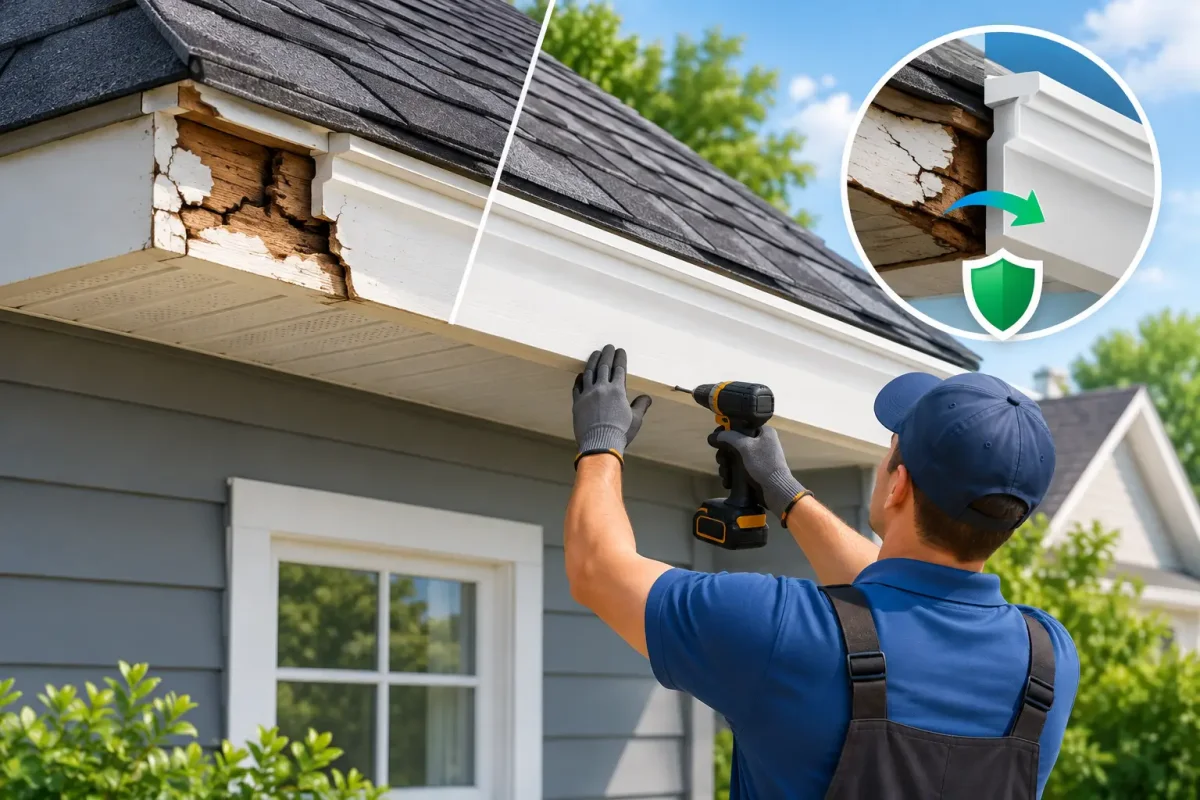
A gutter that pulls away from the house is not always a gutter problem. Often, the board behind it has softened from moisture, leaving the fasteners with nothing solid to hold. Fascia repair addresses that hidden weak point before a damaged roofline turns into leaks, pest entry, or costly repairs to the roof structure.
The fascia is the long board running along the lower edge of your roof. It supports the eavestrough system, creates a clean finished edge, and helps protect the roof framing from weather. Because it sits directly beside the gutter, it is exposed to every overflow, ice buildup, clogged downspout, and wind-driven rain event your home experiences.
For homeowners, the goal is simple: find the source of the damage, repair the affected materials properly, and make sure water is being carried away from the house going forward.
What Fascia Damage Looks Like
Fascia problems can begin quietly. A small gutter leak may wet the same section of board for months before the signs become obvious from the ground. By the time paint is peeling or the board is visibly sagging, the damage may extend farther than the surface suggests.
Watch for soft or crumbling wood, dark staining, peeling paint, gaps at the roofline, and gutters that appear tilted or loose. You may also see water running behind the gutter during a heavy rain rather than flowing into it. In some cases, birds, squirrels, or insects use openings around damaged fascia and soffit as an entry point to the attic.
Inside the home, water marks near exterior walls or attic moisture can be related to a roofline issue, but they are not proof of a fascia problem on their own. Roofing, flashing, ventilation, and gutter drainage all need to be assessed together. This is why a thorough exterior inspection is more useful than replacing a visibly damaged board without checking what caused it.
Why Fascia Repair Matters Before the Damage Spreads
Fascia does more than improve curb appeal. It is part of the system that manages water at the edge of the roof. When it deteriorates, the gutter can sag, pull loose, or drain improperly. That puts more water against the fascia, siding, soffit, and foundation, creating a cycle that gets worse with every storm.
Southern Ontario homes also deal with freeze-thaw conditions and heavy snow loads. Water trapped behind a gutter can freeze, expand, and force components apart. Ice dams and overflowing eavestroughs can make a small weak spot deteriorate quickly, especially on older homes with wood fascia.
Prompt repairs help protect several connected areas at once:
- The roof edge and underlying wood framing
- The soffit and attic ventilation system
- The siding and trim below the eaves
- The eavestroughs and downspouts that direct water away
- The home’s appearance and resale value
The right scope depends on the condition of the roofline. If decay is limited to one short section and the surrounding materials are dry and stable, a targeted repair may be the sensible option. If the board is deteriorated along several elevations or the gutters are near the end of their service life, coordinated replacement usually provides better long-term value.
Common Causes of Fascia Rot and Failure
Most fascia damage comes back to water, but the water does not always come from the same place. Clogged gutters are a frequent cause because overflow repeatedly runs over the back or front edge of the system. Improper gutter pitch, loose joints, undersized downspouts, and downspouts that discharge too close to the house can also contribute to standing water and overflow.
Roofing problems matter too. Worn shingles, failed flashing, or damaged drip edge can allow water to reach the fascia behind the gutter. If a previous installation left gaps or failed to seal vulnerable transitions, moisture can work its way into the wood even when the gutters appear functional.
Poor ventilation can add another layer to the issue. The soffit and roof ventilation system should help move moist air through the attic. When airflow is restricted, condensation may affect roof framing and roofline materials from the inside. That does not mean every fascia issue requires major ventilation work, but it is worth checking when there are repeated moisture problems.
Fascia Repair or Full Replacement?
A professional inspection should determine whether the board can be repaired or should be replaced. Surface paint failure alone does not always mean the fascia is rotten. On the other hand, fresh paint over soft wood only hides a problem temporarily.
Targeted fascia repair is often appropriate when damage is isolated and the roof edge, soffit, and surrounding trim remain sound. The damaged section is removed, the area behind it is inspected for moisture damage, and new material is installed and sealed correctly. The gutter is then securely reattached with proper alignment and slope.
Full fascia replacement makes more sense when multiple sections are soft, gutters have repeatedly pulled away, or the existing trim is aging across the home. It can also be a smart choice during an eavestrough replacement, roof replacement, or siding project. Completing connected work at the same time avoids removing and reinstalling materials later, and it creates a cleaner, more consistent finished result.
Material selection matters. Wood fascia can suit certain homes, but it requires ongoing paint maintenance and can be vulnerable where moisture control is poor. Aluminum-wrapped fascia provides a durable, low-maintenance finish while protecting the board beneath. In other situations, composite or PVC trim may be considered for high-moisture areas. The best choice depends on the home’s existing exterior, the condition of the roofline, and the planned gutter system.
What a Proper Fascia Repair Should Include
A reliable repair is not simply a matter of fastening a new board behind an old gutter. The work should start with an inspection of the damaged section and the surrounding roof edge. If water has reached the roof deck, rafter tails, or soffit framing, those issues need attention before new finish materials cover them up.
The contractor should also identify why the fascia failed. Was the gutter overflowing? Is the drip edge directing water correctly? Are downspouts handling the roof’s water volume? If the source is not corrected, even high-quality replacement materials can be damaged again.
Once the repair area is prepared, the new fascia should be installed straight, secure, and properly finished. Gutters need the right pitch toward the downspouts and solid fastening into sound structure. Where appropriate, replacing worn gutter sections, adding downspouts, or addressing leaking seams can protect the repair and improve overall drainage.
A final walkthrough should include a clear explanation of the completed work, cleanup around the home, and warranty details. Homeowners should not be left guessing whether the new gutter system is draining as intended or whether additional roofline work is recommended.
When to Schedule an Inspection
Do not wait for a gutter to fall or water to appear inside the home. Schedule an inspection if you notice a sagging gutter, peeling roofline paint, a visible gap under the eaves, recurring overflow, or staining on fascia and soffit. It is also wise to check the roofline after severe storms and before winter, when drainage problems can become harder to manage.
For homes in Hamilton, Burlington, and Oakville, a coordinated exterior assessment can be especially useful when fascia concerns appear alongside aging eavestroughs, soffit damage, worn siding, or roofing issues. Repairing the right components together can reduce repeat labor and give the home a more uniform finish.
Fascia repair is a small project only when the damage is caught early. A dry, securely supported roofline protects the rest of your exterior and gives you one less problem to worry about when the next heavy rain arrives.

14 November 2026
Exterior Renovation Financing Made Practical
14 November 2026