
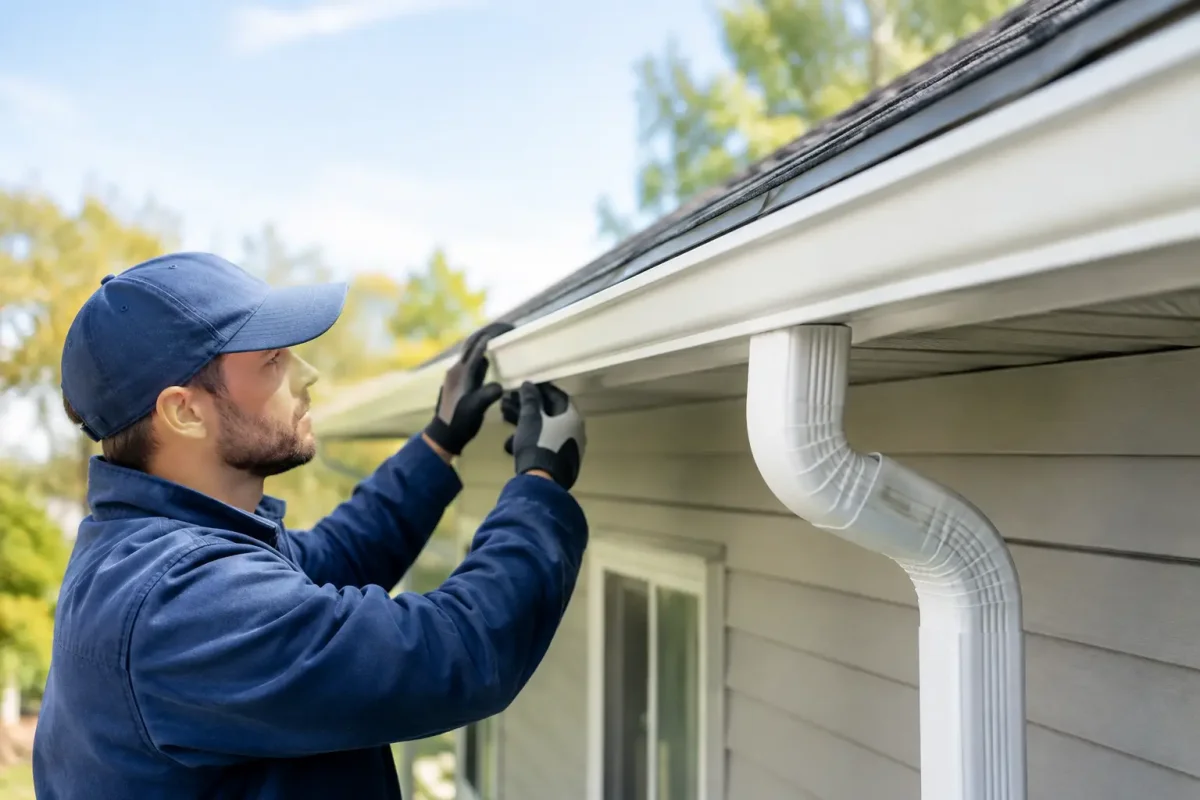
A gutter system can look fine from the driveway while quietly directing water into the wrong places. Overflow at the roofline, water pooling beside the foundation, peeling fascia, and damp spots near the basement are all signs that residential eavestrough replacement may be the safer choice than another patch. For homeowners, the goal is simple: move rainwater and snowmelt away from the house before it can damage the roof edge, siding, foundation, or landscaping.
When Residential Eavestrough Replacement Makes Sense
Eavestroughs do not need to be replaced because they look old. They need replacement when they can no longer collect and direct water reliably. A single loose bracket or clogged downspout can often be repaired. Widespread sagging, recurring leaks, corroded sections, or seams that fail every season usually point to a system that has reached the end of its useful life.
Look closely after a steady rain. Water spilling over the front of the trough may be caused by debris, but it can also mean the system is undersized, improperly pitched, or overwhelmed by water coming off the roof. Water running behind the eavestrough is another concern. It can soak the fascia board, stain siding, and create rot that remains hidden until the damage is more extensive.
Replacement is often the practical choice when you notice several of these problems at once:
- Cracks, holes, rust, or separated joints in multiple sections
- Sagging runs or brackets pulling away from the fascia
- Downspouts that drain too close to the foundation
- Repeated ice buildup or water overflow in the same areas
- Rotting fascia, soffit damage, or peeling paint around the roofline
In Southern Ontario, freeze-thaw cycles add pressure to every weak joint and low spot. Water trapped in a poorly sloped eavestrough can freeze, expand, and make a minor issue worse before spring arrives.
Why Waiting Can Cost More
An eavestrough problem is rarely limited to the trough itself. Water follows the easiest path. If that path is behind the gutter, down the siding, or toward the foundation, repair costs can spread quickly.
At the roofline, persistent moisture can damage fascia boards and soffits. Along the walls, it can stain or loosen siding and contribute to moisture issues around windows and doors. At ground level, poor drainage can erode landscaping, saturate soil near the home, and increase the risk of basement water intrusion.
There is a trade-off to consider. A limited repair is less expensive upfront when the existing system is structurally sound and the issue is isolated. But repeatedly sealing old seams, replacing failing hangers, and correcting the same drainage issue can become a frustrating cycle. A properly designed replacement gives the whole roof edge a fresh start and addresses the cause, not just the visible leak.
Choosing the Right Eavestrough System
The best system depends on the roof size, pitch, number of valleys, local tree cover, and where water can safely discharge on the property. A professional inspection should account for each of these details rather than treating every home the same.
Seamless Aluminum for Most Homes
Seamless aluminum eavestroughs are a common choice for residential properties because they are durable, lightweight, and available in colors that complement siding, soffit, and fascia. Since long runs are formed to fit the home, there are fewer joints where leaks can develop.
Aluminum is not indestructible. Ladders, falling branches, and heavy ice can dent it. Still, for most homeowners, it offers a strong balance of appearance, performance, and cost when installed with the right slope and secure hangers.
Size and Downspout Capacity Matter
A larger eavestrough is not automatically necessary, but capacity should match the roof. Large roof planes and valleys can send a surprising volume of water into one area during a hard downpour. If the trough or downspout is too small, water may overflow even when the system is clean.
Adding or relocating a downspout can make a major difference. The right layout directs water away from walkways, patios, and foundation walls without creating a new drainage problem elsewhere. Extensions or underground drainage may also be worth discussing when lot grading is limited.
Leaf Protection Is Helpful, Not Magic
Gutter guards can reduce the amount of debris entering the system, especially on lots with mature trees. They are not a substitute for proper sizing, correct slope, or occasional maintenance. Some guard styles perform better with certain leaf types and roof designs than others.
For a home with minimal tree cover, a quality open system that is easy to inspect may be all that is needed. For heavily treed properties, leaf protection can reduce cleaning frequency and help prevent clogs at downspout openings. The right answer depends on the property, not a one-size-fits-all add-on.
What Professional Installation Should Include
Good residential eavestrough replacement is more than attaching new metal to the roof edge. The condition of the fascia, soffit, drip edge, and roofline should be assessed before installation begins. Installing new troughs over soft or rotted fascia can hide a problem temporarily, but it does not correct it.
The old system should be removed carefully, followed by an inspection of the supporting boards. Any required fascia or soffit repairs should be handled before the new eavestrough is installed. This is especially valuable when homeowners are also planning siding or roofing work, since coordinating exterior upgrades can prevent duplicated labor and mismatched finishes.
New eavestrough runs need a controlled slope toward each downspout. Too little slope allows standing water. Too much can look uneven and may not improve performance. Secure hangers, properly placed outlets, sealed end caps, and clean downspout connections all matter because small installation shortcuts tend to show up during the first heavy storm.
A reliable contractor should also keep the jobsite orderly, remove old materials, and complete a final walkthrough. Homeowners should know where each downspout discharges, what maintenance is recommended, and what warranty coverage applies to both materials and workmanship.
Plan Replacement Around the Rest of Your Exterior
Eavestrough replacement is often a stand-alone project, but it can also be the right time to address related exterior concerns. If fascia is deteriorating, soffits are vented poorly, or siding has water stains near the roofline, looking at the full picture can prevent a partial repair from being undone by an adjacent problem.
The same applies to roof work. If shingles, flashing, or drip edge need attention soon, coordinating those projects can help protect the new system and produce a cleaner finished result. Homeowners do not always need a complete exterior renovation, but a clear inspection helps separate urgent work from improvements that can be planned for later.
For homes in Hamilton, Burlington, and Oakville, seasonal timing also matters. Eavestrough work can be completed through much of the year when conditions allow, but booking before the busiest weather periods gives you more flexibility. It also reduces the chance of facing another season of overflow with a system that is already failing.
Start With an On-Site Assessment
The right replacement plan begins with a look at how water moves across your roof and around your property. Photos of a leak can be useful, but they do not always reveal a blocked outlet, poor slope, damaged fascia, or a downspout layout that is sending water toward the foundation.
A professional on-site assessment should result in a clear recommendation, a customized quote, and an honest explanation of whether repair or replacement makes better financial sense. Petra Eavestrough & Siding can also coordinate related fascia, soffit, siding, and roofing needs when the inspection shows that water has affected more than the gutters.
If your eavestroughs are overflowing, pulling away from the roofline, or leaving water where it does not belong, do not wait for the next major storm to make the decision for you. A properly installed system protects the exterior you have invested in and gives rainwater one clear place to go: away from your home.
14 October 2026