
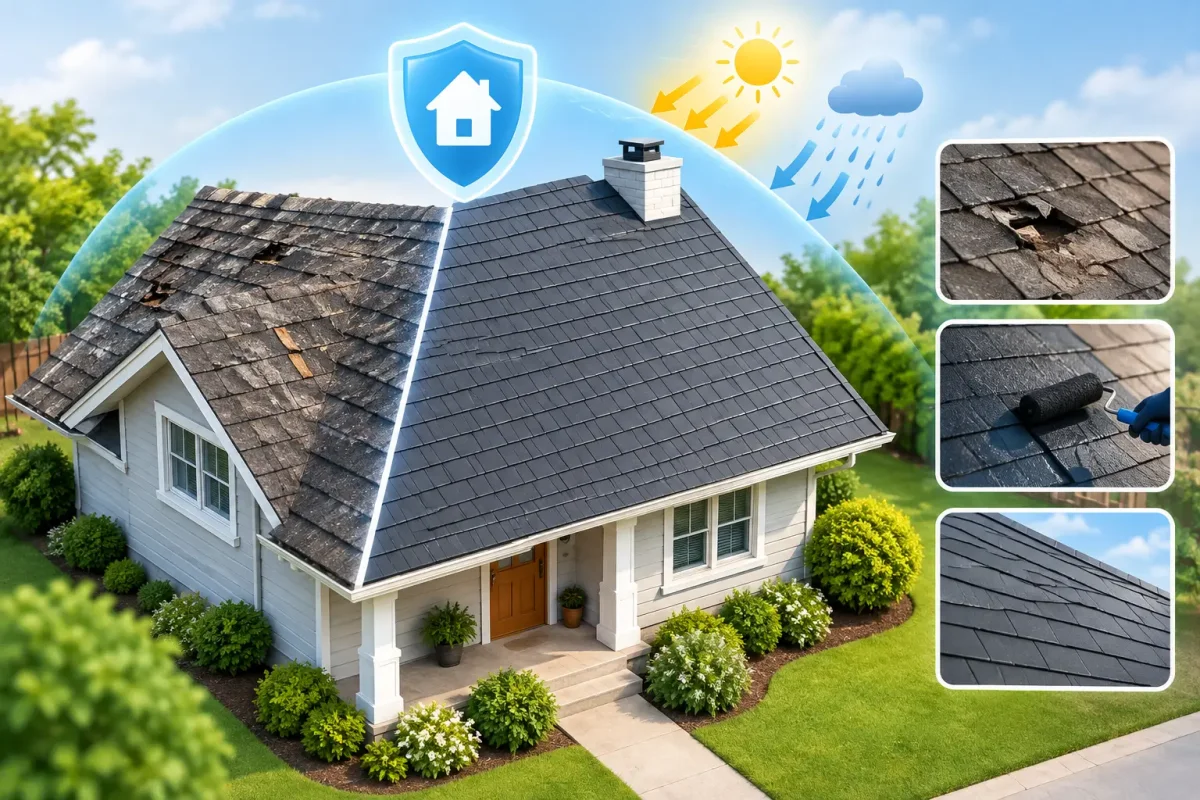
A roof rarely fails all at once. More often, homeowners notice a water stain near a chimney, a few shingles in the yard after a storm, or dark streaks that make the whole roof look older than it is. These roof restoration examples show how the right scope of work can stop damage early, improve curb appeal, and protect the rest of the exterior.
The key is not treating every roof issue the same way. A small flashing failure may only need a focused repair. Widespread shingle wear, recurring leaks, and damaged roof edges can point to a larger restoration or replacement project. A professional inspection helps separate a repairable problem from a roof that has reached the end of its useful life.
Roof Restoration Examples for Common Home Problems
Example 1: A leaking chimney with worn flashing
A homeowner may assume the shingles are leaking when water appears on a ceiling near the fireplace. In many cases, the real problem is flashing: the metal material that seals the area where the chimney meets the roof.
Restoration work can include removing shingles around the chimney, replacing corroded or improperly installed flashing, repairing any damaged roof decking, and installing new matching shingles. This is a targeted repair, but it is a critical one. If water gets behind failing flashing, it can damage insulation, framing, ceilings, and interior finishes before the leak becomes obvious.
This type of project makes sense when the surrounding roof is still in good condition. If the shingles are brittle, curling, or near the end of their lifespan, it may be more cost-effective to address the full roof rather than repeatedly repair isolated areas.
Example 2: Wind-lifted shingles after a storm
High winds can break the adhesive seal on shingles, lift their edges, or pull them off completely. Missing shingles expose the underlayment and roof deck to rain. Even shingles that remain in place can become vulnerable if their tabs are cracked or no longer sealed.
A proper restoration starts with checking more than the visible missing pieces. The contractor should inspect adjacent shingles, ridge caps, vents, flashing, and the roof edges where wind damage often begins. Replacing only the most obvious shingles without checking the surrounding area can leave weak points behind.
Color matching is another consideration. New shingles may not blend perfectly with an older roof, especially after years of sun exposure. For a small repair on a relatively new roof, that trade-off is usually reasonable. For widespread wind damage on an aging roof, a full replacement can provide a cleaner appearance and a more dependable result.
Example 3: Dark streaks, moss, and algae growth
Dark roof streaks are often caused by algae, while moss tends to hold moisture against the shingles. Neither issue should be ignored, but neither automatically means the roof needs replacement.
For a roof with solid shingles and no signs of leaking, restoration may involve careful cleaning, moss treatment, and correcting the conditions that allow moisture to linger. Overhanging branches may need trimming to increase sunlight and airflow. Clogged gutters should be cleared so water moves away from the roofline instead of backing up at the edge.
Pressure washing is not the answer for most asphalt shingle roofs. High-pressure water can strip away protective granules and shorten the life of the shingles. The right cleaning method depends on the roofing material, its age, and the extent of growth. A contractor should protect siding, landscaping, and eavestroughs during the process.
Example 4: A sagging section caused by moisture damage
A visible dip in the roof is more than a curb appeal problem. It can signal damaged decking, weakened rafters, or long-term moisture intrusion. This is one of the roof restoration examples where a surface-level fix is not enough.
The affected roofing materials must be removed so the structure underneath can be inspected. Damaged decking should be replaced, the source of the leak corrected, and new underlayment and shingles installed. Depending on the cause, the work may also include improving attic ventilation or replacing damaged fascia boards along the roof edge.
Sagging should be addressed promptly. Waiting can allow a small weak area to spread, increasing the repair scope and putting more strain on the roof structure.
Example 5: Roof edge damage with failing fascia and gutters
The roof, fascia, soffit, and eavestrough system work together. When gutters overflow or pull away from the house, water can soak the fascia board behind them. Over time, wood can rot and shingles at the roof edge may deteriorate.
A coordinated exterior restoration may include replacing damaged fascia, repairing the roof edge, installing proper drip edge flashing, and replacing undersized or failing eavestroughs. This approach addresses the source of the problem instead of simply covering damaged wood with new metal.
This is especially valuable on homes where water runs over entryways, patios, or foundation areas during heavy rain. Proper drainage helps protect the roofline and directs water away from the home where it belongs.
When Restoration Turns Into Roof Replacement
Roof restoration is a broad term. It can describe anything from repairing a leak-prone section to renewing several roof components. But there is a point where repeated repairs stop being good value.
Replacement is often the smarter choice when shingles are extensively curled, cracked, bald from granule loss, or leaking in multiple locations. It may also be recommended when the existing roof has several layers of old shingles, ventilation is poor, or the deck has widespread moisture damage.
A full roofing project gives the installer access to the entire system: decking, ice and water protection, underlayment, flashing, vents, drip edge, and shingles. That matters because a roof is only as reliable as the details underneath and around the shingles.
Homeowners sometimes focus on the lowest repair price, only to face another leak a season later. The better question is how long the proposed work is expected to last and whether it solves the underlying issue. A clear inspection and written scope of work make it easier to compare options honestly.
What a Professional Roof Inspection Should Identify
Before recommending a solution, a qualified contractor should look for evidence of both exterior and interior damage. The shingles tell part of the story, but attic moisture, soft decking, rusted flashing, and poor ventilation can reveal why a roof is failing.
A useful inspection should assess the roof’s overall age and condition, vulnerable penetrations such as vents and chimneys, valleys where water concentrates, roof edges, gutters, and visible signs of interior water intrusion. It should also consider how the roof connects to siding, soffit, fascia, and drainage components.
For homeowners planning additional exterior work, timing matters. Replacing a roof before new gutters or fascia are installed can prevent avoidable rework. Likewise, addressing roof leaks before installing new siding protects the investment in the rest of the home exterior.
Choosing the Right Scope for Your Home
The best roofing solution is not always the biggest project. A localized repair can be the right decision for a newer roof with one clear point of failure. A more comprehensive restoration is better when several components are worn, drainage issues are contributing to damage, or the home needs a coordinated exterior update.
Ask for straightforward answers about what is damaged, what caused it, what materials will be used, and what warranty applies to the work. You should also know how the crew will protect your property, manage cleanup, and handle unexpected deck repairs if they are found once old materials are removed.
Petra Eavestrough & Siding helps homeowners evaluate roofing concerns as part of the full exterior system, so repairs, drainage, fascia, and surrounding finishes can work together instead of creating the next problem.
If your roof has started showing its age, do not wait for a ceiling stain to make the decision for you. A professional on-site inspection can give you a clear path forward, whether that means a focused repair or a longer-lasting restoration built around your home.
16 October 2026