A hot upstairs bedroom, frosty attic nails, peeling paint near the roofline, or shingles that seem to age too fast can all point to the same overlooked issue: poor attic airflow. The roof ventilation upgrade benefits homeowners notice most are better moisture control, more consistent temperatures, and a roofing system that has a better chance of reaching its expected service life.
For homeowners, ventilation is not a cosmetic upgrade. It is part of the system that protects the roof deck, insulation, soffit, fascia, and interior of the home. When it is planned correctly during a roofing, soffit, or fascia project, it helps prevent expensive problems that often stay hidden until damage has already spread.
Why attic ventilation matters
Your attic sits between conditioned living space and the outdoor weather. In summer, the roof absorbs intense heat. In winter, warm indoor air can move upward into the attic, carrying moisture with it. Without a clear path for fresh air to enter and warm, moist air to leave, that space can become excessively hot, damp, or both.
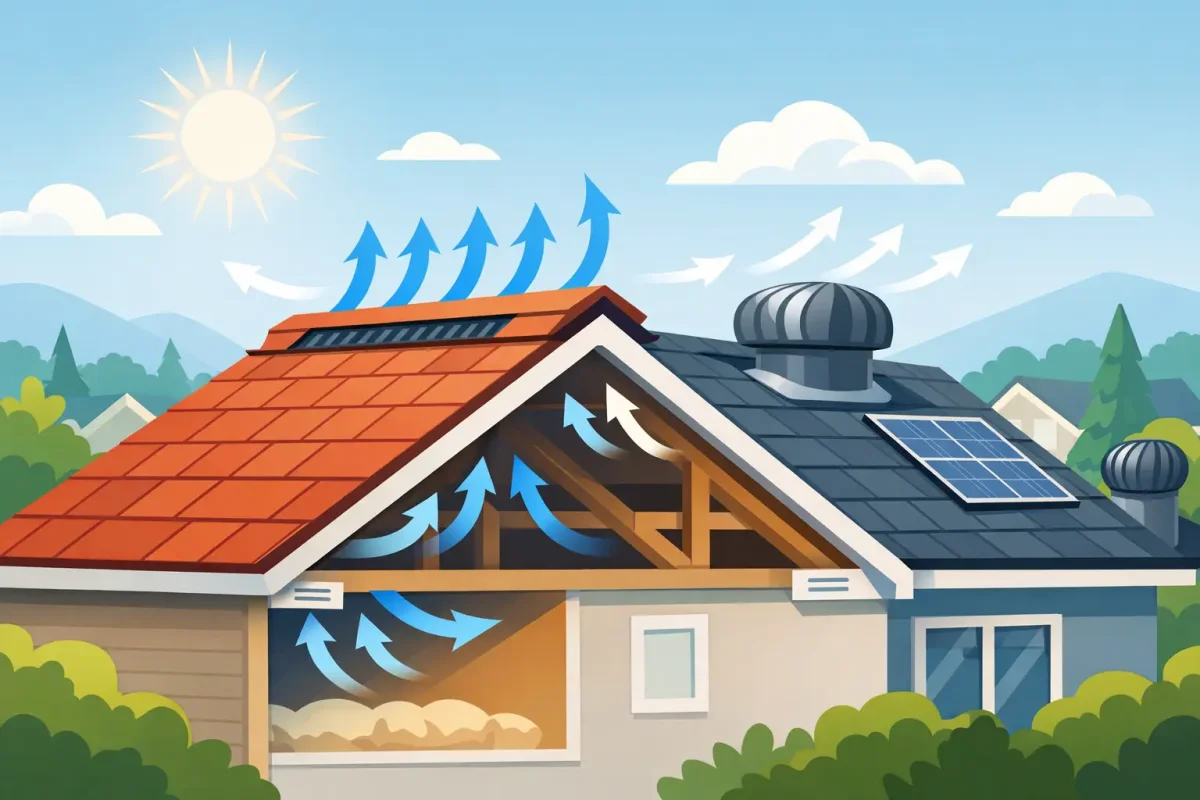
A balanced system typically uses intake vents low on the roof, often through vented soffit, and exhaust vents high on the roof, such as ridge vents or properly placed roof vents. Cooler outside air enters at the eaves and pushes rising warm air out near the ridge. The airflow itself is simple, but the design needs to match the roof shape, attic layout, insulation level, and existing vent openings.
Ventilation is not the same as insulation or air sealing. All three work together. Insulation slows heat transfer, air sealing limits warm household air from leaking into the attic, and ventilation helps manage the heat and moisture that still reach that space. Improving only one part can leave the underlying problem unresolved.
Roof ventilation upgrade benefits that protect the whole exterior
Less moisture in the attic
Moisture is one of the biggest reasons to address attic ventilation. During cold weather, humid air from showers, cooking, laundry, and everyday living can escape through gaps around light fixtures, plumbing penetrations, attic hatches, and other openings. When that warm air meets a cold roof deck, it can condense.
Over time, condensation can lead to dark staining, mold growth, damp insulation, rusted fasteners, and roof deck deterioration. In severe cases, homeowners may see water marks on ceilings and assume the roof is leaking, even when the real issue is attic moisture.
An upgrade will not correct every moisture source by itself. Bathroom fans must vent outdoors, not into the attic, and obvious air leaks should be addressed. But adequate intake and exhaust ventilation gives that moisture a path out before it can cause lasting damage.
A longer-lasting roofing system
Excess attic heat can put additional stress on shingles and the materials beneath them. In an under-ventilated attic, summer temperatures can climb well above the outdoor temperature, especially on dark roofs with direct sun exposure. That heat can accelerate shingle aging and make the attic uncomfortable.
Proper ventilation cannot reverse an old roof or compensate for poor installation. It can, however, support the performance of a new roofing system by reducing trapped heat and moisture below the roof deck. This is particularly valuable when replacing shingles, because it is the right time to inspect the decking, baffles, vent openings, and condition of the soffit.
Many shingle manufacturers also set ventilation requirements for warranty coverage. A qualified contractor can review the product specifications and ensure the ventilation approach is appropriate for the roofing material being installed.
More comfortable rooms below the attic
Second-floor rooms often feel warmer than the rest of the house in summer. There are several possible causes, including insufficient insulation, ductwork issues, sun exposure, and air leaks. A poorly ventilated attic can add to the problem by holding heat directly above those rooms for hours after sunset.
A ventilation upgrade can reduce that attic heat buildup and help the upper level feel less extreme. Results vary by home. It should not be sold as a replacement for air conditioning, insulation, or proper air sealing. Still, when ventilation is part of a complete attic and roof assessment, it can make a meaningful difference in comfort.
Better protection against winter ice dams
Ice dams form when heat escaping from the home warms the roof surface, snow melts, and the water refreezes near colder eaves. The resulting ridge of ice can force water back under shingles and into the home.
Ventilation helps keep the attic and roof deck closer to the outdoor temperature. Combined with adequate insulation and air sealing, this reduces the conditions that contribute to ice dams. For homes in cold-weather regions, this is one of the most practical long-term reasons to inspect attic airflow before winter damage occurs.
Healthier soffit, fascia, and eaves
The roof edge does more than frame the house. Soffit often provides the intake side of the ventilation system, while fascia supports the gutter line and protects the roof edge. When these components are blocked, damaged, or poorly installed, airflow can suffer.
Replacing worn soffit and fascia is an opportunity to correct inadequate intake ventilation, repair rot, and improve the finished look of the home at the same time. Coordinating these exterior components with a roofing project avoids piecemeal work and helps ensure the system functions as intended.
Signs your home may need a ventilation inspection
Some ventilation problems are visible from the ground, while others require an attic inspection. Homeowners should be cautious about treating roof vents as a simple add-on. Adding more exhaust without enough intake, for example, may not improve airflow and can create new issues.
It is worth scheduling a professional assessment if you notice several of these conditions:
- Your upstairs rooms are consistently much hotter in summer.
- Frost, damp wood, mold, or musty odors appear in the attic.
- Shingles curl, blister, or wear out earlier than expected.
- Ice dams return along the eaves each winter.
- Existing soffit vents are painted over, clogged, or missing.
- A bathroom or dryer vent terminates inside the attic.
- You are planning a roof replacement, new insulation, or soffit and fascia work.
A trained exterior contractor should look beyond the number of visible vents. The inspection should include the attic, roofline, soffit intake, insulation coverage, ventilation obstructions, and any evidence of water intrusion or condensation.
What a smart ventilation upgrade looks like
The right solution depends on the home. A simple gable roof may work well with continuous soffit intake and ridge exhaust. A hip roof, cathedral ceiling, finished attic, or home with multiple roof sections may need a more tailored approach. The goal is balanced airflow, not simply installing the largest number of vents possible.
First, the contractor confirms whether intake air can reach the attic. Insulation often blocks soffit openings when baffles are missing or damaged. Next, they calculate the ventilation needed for the attic area and identify whether ridge vents, box vents, or another exhaust option best suits the roof design. Finally, they check that bath fans, kitchen exhaust, and dryer vents are routed correctly and independently.
Powered attic fans can be useful in specific situations, but they are not automatically the best answer. If the attic is not well air-sealed, a powered fan may pull conditioned air from the living space into the attic, increasing energy use. Passive, balanced intake and exhaust ventilation is often the more dependable starting point.
Plan ventilation with your next exterior project
A roof ventilation upgrade is most efficient when it is handled alongside related exterior work. During a roof replacement, crews already have access to the roof deck and ridge. During soffit and fascia replacement, they can improve the intake side of the system. Addressing these components together reduces repeat labor, keeps the exterior finish consistent, and helps prevent one new component from being limited by an older failing one.
For Southern Ontario homeowners, Petra Eavestrough & Siding can assess the full roofline rather than treating a hot attic or damaged soffit as an isolated issue. A clear on-site inspection helps identify what needs repair now, what can wait, and which improvements will provide real protection for the home.
A well-ventilated attic is quiet work that pays off over time. Before the next roof, soffit, or fascia project begins, ask for the airflow behind the visible exterior to be checked too.

1 September 2026
Versetta Stone Installation: What Homeowners Need

1 September 2026