
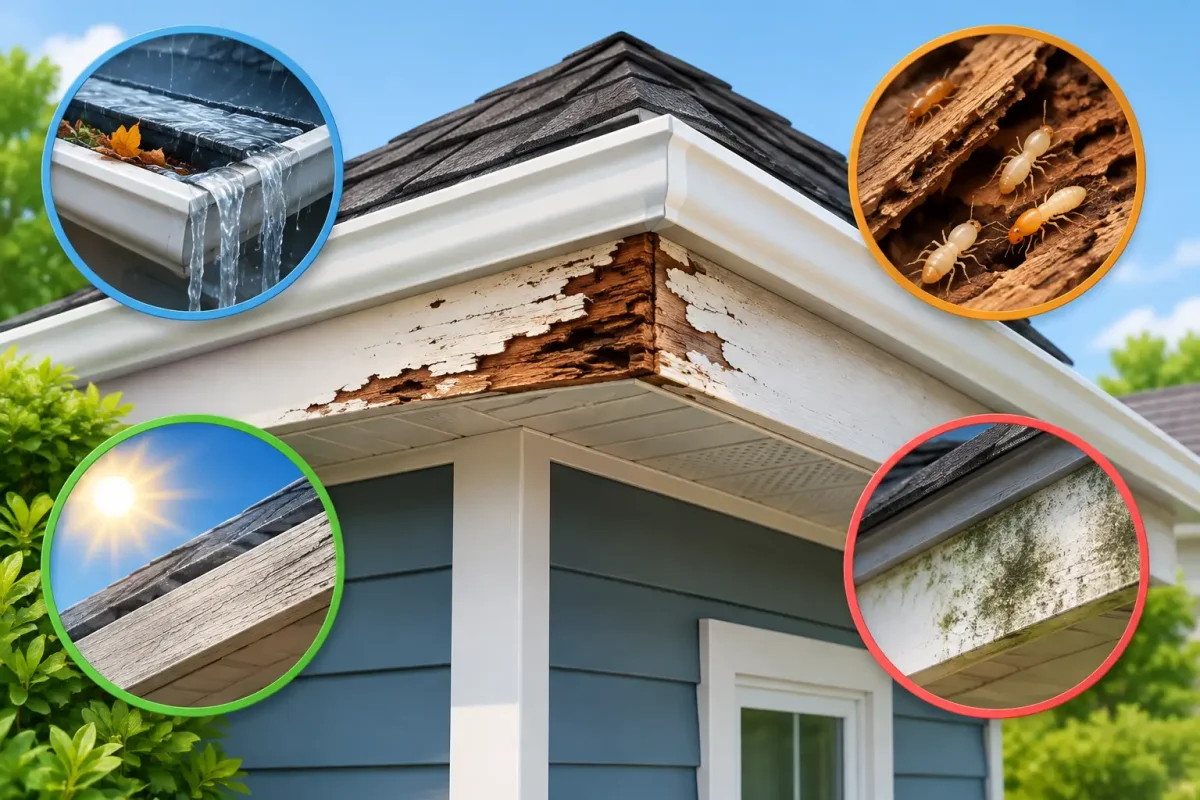
A soft, stained, or peeling fascia board is rarely just a cosmetic issue. Fascia sits at one of the busiest water-management points on your home: directly behind the gutters and beneath the roof edge. When it starts to rot, water may already be getting where it should not. Understanding the top causes of fascia board rot helps homeowners act before a small repair turns into damaged soffit, roof decking, siding, or interior leaks.
Why Fascia Boards Rot So Quickly
Fascia is the long horizontal board installed along the lower edge of the roof. It supports the gutter system, closes off the roof structure, and creates a finished line between the roof and soffit. Because it is exposed to rain, snow, ice, and condensation, fascia depends on properly installed roofing, flashing, gutters, and ventilation to stay dry.
Wood does not rot simply because it gets wet once. Rot develops when moisture stays trapped in the material long enough for fungal decay to take hold. In Southern Ontario, repeated freeze-thaw cycles, heavy rain, snow buildup, and clogged eavestroughs can make that moisture problem worse.
The Top Causes of Fascia Board Rot
Clogged or Overflowing Gutters
Clogged gutters are one of the most common reasons fascia boards fail. Leaves, roof grit, nesting material, and debris stop water from moving to the downspouts. Instead, rainwater backs up and spills over the gutter edge or sits against the fascia behind it.
That exposure can soak an unprotected wood board repeatedly. In winter, trapped water can freeze and expand, opening paint cracks and small gaps that allow even more moisture into the wood. A gutter that sags away from the fascia or has standing water after rain needs attention before the mounting area weakens.
Leaking Gutters and Failed Seams
A gutter does not need to be full to cause damage. Small leaks at seams, end caps, corners, or downspout connections can release a steady stream of water onto the same section of fascia. Over time, that narrow wet spot can create a localized area of rot that spreads behind the gutter where it is difficult to see.
This is why homeowners should not ignore dripping at a gutter joint. Caulking can sometimes be a short-term fix, but older or corroded eavestrough sections may need replacement. The right solution depends on the gutter’s age, slope, condition, and how much water damage has developed behind it.
Roof Edge Leaks and Missing Drip Edge
Water should leave the roof and drop directly into the gutter. A properly installed drip edge guides it there. When the drip edge is missing, bent, too short, or improperly positioned, rainwater can run behind the gutter and onto the fascia board.
Roofing issues can create the same result. Damaged shingles near the eaves, worn underlayment, failed flashing, or an ice dam can send water into places it was never meant to go. If fascia rot appears only in one area, particularly near a roof valley or chimney, the gutter may not be the only problem. The roof edge should be inspected at the same time.
Ice Dams and Winter Moisture
Ice dams form when snow melts on a warmer upper roof, runs down to the colder roof edge, and refreezes. The ice blocks normal drainage, allowing melting water to back up beneath shingles and around the eaves.
The visible ice is only part of the concern. Repeated thawing and refreezing can force moisture into fascia joints, soffit openings, and roof decking. Homes with uneven attic insulation or poor ventilation are more likely to experience this problem. Replacing fascia without addressing the heat loss or ventilation issue can leave the new material exposed to the same conditions next winter.
Failed Soffit or Attic Ventilation
Soffit and fascia work together. Soffit panels allow air into the attic, while roof vents allow warm, moist air to escape. When soffit vents are blocked, missing, or poorly installed, moisture can accumulate in the attic and along the roof edge.
That moisture may show up as peeling fascia paint, dark staining, mold, or soft wood around the eaves. Bathroom fans venting into the attic can add to the problem. A contractor should check the whole roof-edge system instead of treating the fascia board as an isolated trim issue.
Cracked Paint, Open Joints, and Aging Caulk
Paint and exterior caulk are protective barriers, not permanent solutions. As they age, sunlight, seasonal movement, and moisture cause them to crack or separate. Open joints at fascia corners, between boards, or near gutters give water a direct path into exposed wood end grain.
Early maintenance can help when the board is still structurally sound. Once the wood feels soft, flakes apart, or no longer holds a gutter fastener securely, repainting over it will not solve the problem. The damaged section should be replaced so the gutter has a stable mounting surface.
Poor Installation or Incompatible Materials
Fascia rot can begin soon after a renovation if the original installation was incomplete. Common issues include unsealed wood cuts, incorrect flashing, gutters pitched the wrong way, fasteners driven through vulnerable areas, and fascia installed without adequate protection from roof runoff.
Material choices matter as well. Wood fascia can perform well when it is correctly primed, painted, flashed, and maintained. However, many homeowners choose aluminum-clad fascia or other low-maintenance exterior materials to reduce ongoing exposure. The best option depends on the home’s existing siding, soffit, roofline, budget, and the condition of the underlying structure.
Warning Signs That Need a Closer Look
Some fascia damage is visible from the ground, while other problems are hidden behind gutters. Watch for peeling paint, swollen or warped boards, dark streaks, soft spots, mold, sagging gutters, loose gutter spikes, and water stains on the soffit. Pests may also target rotted fascia because softened wood creates easy entry points near the attic.
Inside the home, damp insulation near the exterior wall, attic staining, or a musty smell near the roofline can point to a larger moisture issue. These signs do not always mean the fascia is the source, but they are a good reason to schedule an exterior inspection.
When Repair Is Enough and When Replacement Makes Sense
A limited repair may be appropriate when damage is confined to a small section and the surrounding wood remains dry and solid. The source of water must be corrected first, whether that means cleaning the gutters, repairing a leak, adding drip edge, or addressing a roofing concern.
Replacement is usually the safer choice when rot extends behind the gutter, the board has lost its strength, or several roof-edge components are failing together. During replacement, the contractor can inspect the roof decking, soffit, gutter hangers, and flashing before covering the area again. This coordinated approach prevents a fresh fascia board from hiding an unresolved water problem.
For homeowners planning new siding, eavestroughs, or roofing, fascia replacement is often an efficient time to complete the work. Coordinating these connected components can improve drainage, give the roofline a cleaner finish, and reduce the chance of disrupting new exterior materials later.
Protect the Roofline Before Damage Spreads
Fascia rot is usually a signal that water is not being directed away from the home as intended. A professional inspection can identify whether the issue starts with the gutters, roof edge, ventilation, or the fascia itself, then recommend a repair that protects the full exterior system. Addressing the cause early keeps the job cleaner, more contained, and far less disruptive than waiting for the damage to spread.

21 October 2026
Homeowner Guide to Exterior Warranty Coverage

21 October 2026