
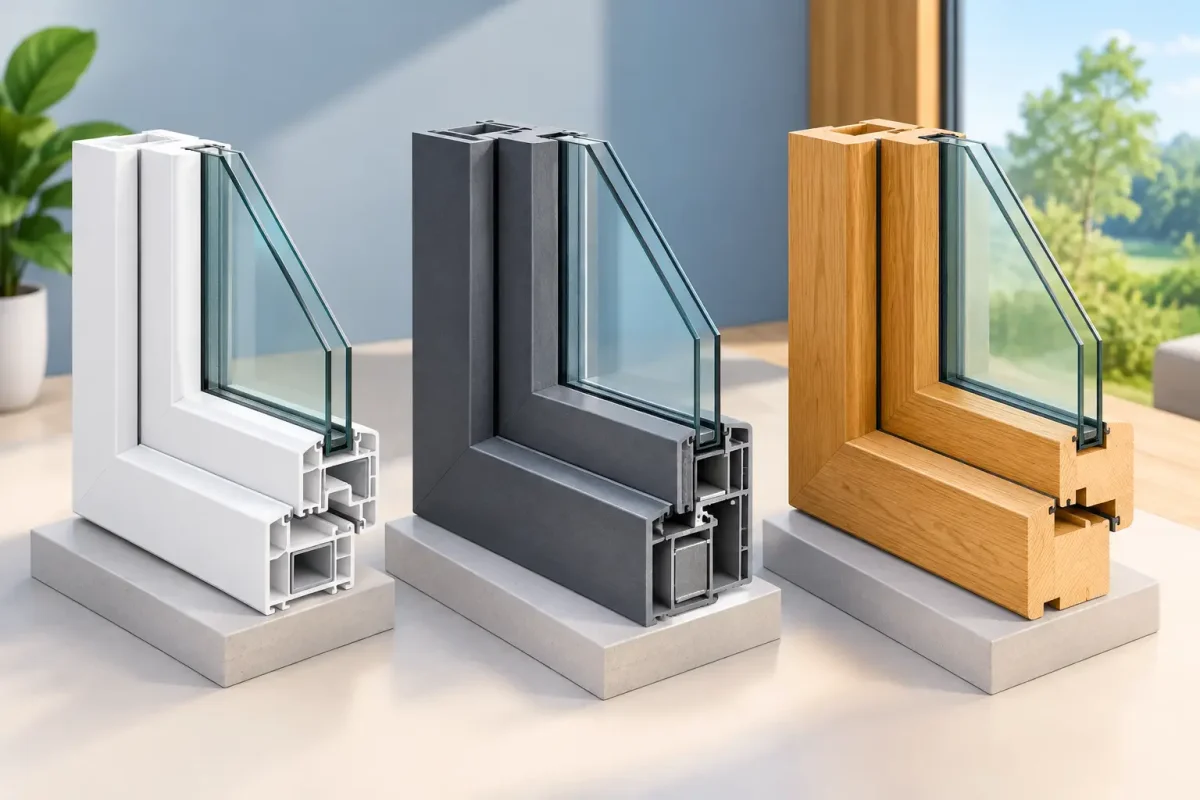
A window that sticks in January, fogs between the panes, or lets cold air reach the sofa is more than an inconvenience. It can raise energy bills, make rooms less comfortable, and signal that moisture has been working where it should not. This window material review looks at the frame materials homeowners most often consider: vinyl, fiberglass, wood, and aluminum.
The right choice is not automatically the most expensive one. It depends on your home’s style, the exposure of each wall, your maintenance expectations, and whether the window replacement is part of a larger exterior project. A well-chosen, professionally installed window should look right, operate reliably, and help protect the home through years of heat, rain, wind, and freezing temperatures.
Window Material Review: What the Frame Changes
Homeowners often focus on glass packages, and for good reason. Low-E coatings, insulated glass, and gas fills all affect comfort and efficiency. But the frame material matters too. It affects how much insulation surrounds the glass, how the window handles temperature swings, how often it needs attention, and how it looks from the curb.
Frame performance is also tied to construction quality. A premium material with weak corners, poor weatherstripping, or an incorrect installation can still leak air and water. That is why comparing materials should be the first step, not the last. The final result depends on the window, the opening, the flashing details, and the crew installing it.
Vinyl Windows: Practical Value for Most Homes
Vinyl remains a popular choice because it offers solid efficiency, low maintenance, and a reasonable installed cost. The frames do not need painting, will not rot, and are easy to clean with mild soap and water. For many families replacing several windows at once, vinyl delivers the best balance of performance and budget.
Quality varies widely. Better vinyl windows use thicker frame walls, reinforced sections where needed, welded corners, dependable weatherstripping, and multi-chamber frame designs that help limit heat transfer. Lower-priced units can feel less rigid, especially in larger openings, and may have fewer color and hardware options.
Vinyl expands and contracts more than fiberglass or wood when temperatures change. A properly built and installed window accounts for this movement, but it is a reason to avoid treating all vinyl products as interchangeable. Dark exterior colors can also absorb more heat, so ask how a manufacturer designs and warranties darker finishes for your climate.
Vinyl makes sense when you want dependable replacement windows without ongoing repainting. It is especially well suited to standard-size openings in homes where efficiency, value, and easy upkeep are the priority.
Fiberglass Windows: Strength and Stability
Fiberglass windows are often chosen for their strength and their ability to handle seasonal temperature changes with minimal movement. Fiberglass expands and contracts at a rate closer to glass than vinyl does. That can help maintain tight seals over time, particularly in areas that face strong sun, wind, and winter weather.
The material is rigid, which makes it a strong candidate for large window openings, narrow sightlines, and designs that need a more substantial frame. Fiberglass can also be finished in a wider range of colors than many vinyl products, including dark exterior colors. Some products can be painted later, although homeowners should always follow the manufacturer’s instructions before changing a finish.
The trade-off is cost. Fiberglass generally costs more than vinyl, and the performance benefit may not justify the extra investment for every opening or every home. It is often a smart upgrade for homeowners planning to stay long term, replacing large feature windows, or coordinating new windows with premium siding, stone, or trim work.
Wood Windows: Traditional Appearance, Real Maintenance
Wood has a warmth and depth that manufactured materials do not fully duplicate. It is a natural fit for older homes, traditional architecture, and interiors where stained trim is part of the design. Wood also provides good natural insulation.
Its main drawback is maintenance. Paint and stain must be kept in good condition, especially on windows exposed to direct sun and driving rain. Once finishes fail, wood can absorb moisture, leading to swelling, peeling, decay, and costly repairs. A wood window can last for decades, but it requires an owner who is willing to keep up with it.
Many homeowners choose wood-clad windows to get a finished wood interior with a lower-maintenance exterior cladding, often aluminum or another protective material. This can be a practical middle ground, but cladding details still matter. Water must be directed away from the unit, and any damaged exterior finish should be addressed promptly.
Aluminum Windows: Best for Specific Designs
Aluminum is strong, slim, and well suited to contemporary designs with larger glass areas. It does not rot, and it can support large openings with narrower frames than many other materials. That makes it attractive for modern homes and certain specialty window configurations.
On its own, aluminum conducts heat readily. Modern residential aluminum windows use thermal breaks to reduce heat transfer, but they may still not match the insulating performance of a good vinyl, fiberglass, or wood option. In cold climates, frame temperature and condensation resistance deserve careful attention.
Aluminum is not automatically the wrong choice. It is simply more specialized. When clean lines, strength, or expansive views are the leading priorities, a high-quality thermally broken aluminum system can be worth considering. For a typical whole-home replacement focused on efficiency and value, other materials are often more practical.
How to Compare Window Materials Fairly
Do not compare materials by name alone. Ask to see the actual window profile, the glass package, hardware, color options, warranty coverage, and available performance ratings. Two vinyl windows can perform very differently, just as two fiberglass products can have very different construction details.
It also helps to evaluate the house one elevation at a time. Windows on a shaded side may have different needs than those facing afternoon sun or frequent wind-driven rain. A bathroom window needs reliable moisture control and ventilation. A front living room picture window may call for a more refined appearance. A bedroom window must meet egress requirements where applicable and should open easily in an emergency.
For most homeowners, the best material decision comes down to three questions: How long do you plan to stay in the home? How much maintenance are you willing to handle? And what level of upfront investment fits the rest of the project? There is no benefit in paying for a premium material that does not solve a real need, but cutting corners on a high-exposure opening can create problems sooner than expected.
Installation Has as Much Impact as the Material
Even the right window frame cannot compensate for a poor installation. The existing opening must be inspected for rot, water damage, improper flashing, and structural issues before a new window is set in place. The installer should ensure the window is level, plumb, square, securely fastened, insulated appropriately, and sealed to direct water away from the wall assembly.
This is particularly important when replacing windows alongside siding, soffit, fascia, or exterior trim. Coordinating the work gives the contractor access to critical transition points that are often hidden once the exterior is finished. It can also create a cleaner, more consistent look around the entire home.
At Petra Eavestrough & Siding, a window recommendation should start with an on-site inspection and a clear discussion of your priorities, not a one-size-fits-all sales pitch. The goal is a window that fits the opening, the exterior design, and the way you plan to maintain your home.
Before you choose, look beyond the sample corner in a showroom. Ask how the proposed window will handle your home’s exposure, how it will be installed, and what the warranty covers. A good answer gives you confidence long after the installation crew has cleaned up and left.
23 October 2026
Top Causes of Fascia Board Rot for Homeowners
23 October 2026