
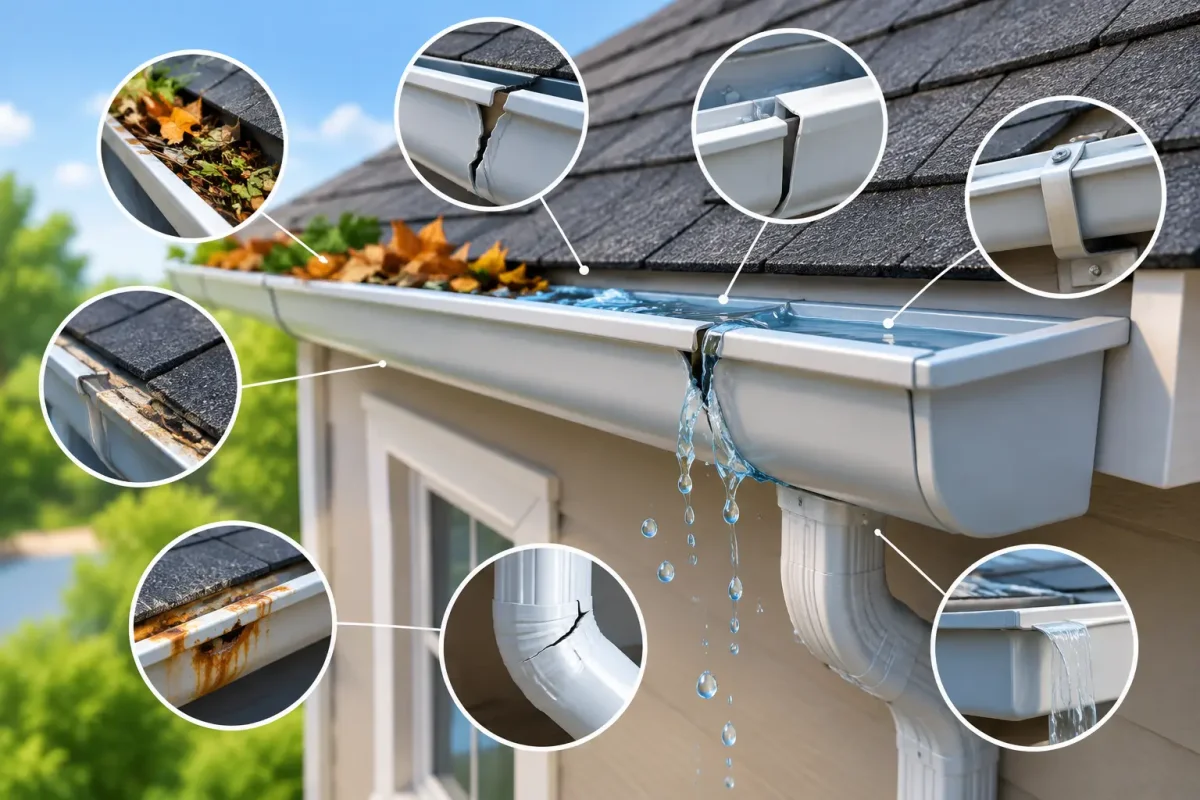
A gutter leak can look minor at first: a drip over the front walk, a wet line on the fascia, or water spilling near a downspout after rain. But if you are asking, why are gutters leaking, the issue is worth addressing before repeated runoff reaches your roof edge, siding, foundation, or landscaping.
Gutters are designed to move a large volume of water away from your home quickly. When part of that system fails, water takes the easiest path it can find. Sometimes that means a simple seam repair. Other times, it points to aging eavestroughs, poor drainage, roof damage, or deteriorating fascia behind the gutter.
Why Are Gutters Leaking? Start With the Leak Location
The location of the water tells you a lot. Water dripping from a gutter joint is different from water running behind the gutter. Overflow from the top is also not always a leak in the gutter itself. It can be a clog, an undersized downspout, or a gutter that no longer has the proper slope.
A professional inspection should look beyond the visible drip. The goal is to determine whether the gutter can be reliably repaired or whether a replacement will offer better long-term protection. Patching a failing system may cost less today, but it can lead to more water damage if the metal, fasteners, or surrounding wood are already worn out.
1. Seams and End Caps Have Failed
Sectional gutters have joints where two pieces connect, as well as end caps at each end. These areas are common leak points because they depend on sealant to remain watertight. Over time, weather changes, sun exposure, ice, and normal movement can dry out or crack the sealant.
You may notice drips at the corners, at a straight joint, or from the end of a gutter run. A fresh sealant application can sometimes solve the problem when the gutter is otherwise in good condition. If seams keep reopening, though, the system may be shifting, sagging, or nearing the end of its useful life.
Seamless aluminum gutters reduce the number of joints along a run, which means fewer opportunities for water to escape. They still have corners and end caps, but they are often a better long-term option for homes with repeated seam leaks.
2. Clogs Are Causing Overflow
Leaves, shingle grit, twigs, seed pods, and nesting material can block water flow. When water cannot reach the downspout, it rises and spills over the gutter edge. From the ground, that can look like a leak even when the gutter itself has no hole.
Overflow is especially common during a heavy downpour, when a partially blocked downspout cannot keep up. Look for water pouring over the front edge, staining on the siding below, or pools forming near the foundation.
Cleaning may restore normal flow, but do not assume a one-time cleaning resolves the underlying issue. Homes under mature trees often need regular maintenance or gutter protection that fits the roof and eavestrough system properly. A poorly fitted guard can create its own problems by allowing debris to collect underneath or sending water over the edge during heavy rain.
3. The Gutter Is Sagging or Pulling Away
Gutters need a slight, controlled slope toward the downspout. If the hangers loosen, the fascia board weakens, or the gutter fills with ice and debris, it can sag in the middle. Water then sits in the low spot instead of draining away.
Standing water adds weight, which worsens the sag and puts more pressure on the fasteners. Eventually, water may spill over the back of the gutter or leak at a joint that has been pulled out of alignment.
This is not a problem to ignore. A gutter that is pulling away from the roofline may expose damaged fascia, and installing new gutters over rotten wood does not solve the problem. The fascia should be repaired or replaced first so the new system has a solid surface for secure attachment.
4. There Is a Hole, Crack, or Corrosion Spot
Small holes can develop in older metal gutters, particularly where wet debris sits for long periods. Rust is more common in steel systems, while aluminum may develop pinholes or damage from impact. Ladders, branches, and ice can also bend or crack gutter sections.
A tiny hole may be patchable if the surrounding metal is still solid. But several holes, widespread corrosion, or thin, brittle material are signs that repair is becoming temporary. Replacing the affected run is usually the smarter choice when the gutter has deteriorated across multiple areas.
Do not overlook the downspout. A crack or separated elbow can send water directly against siding or near the foundation, even if the gutter above is working as it should.
5. Water Is Running Behind the Gutter
If you see water marks on the fascia or siding behind the gutter, the problem may be at the roof edge. Water should leave the roof and enter the gutter. When it runs behind the gutter instead, missing or improperly installed drip edge is often involved.
Drip edge is a metal flashing installed along the roof edge to guide water into the gutter. Without it, rain can cling to the underside of shingles and travel behind the eavestrough. This can damage fascia boards, soffits, and roof decking over time.
This issue is particularly worth checking after a roof replacement or when installing new gutters on an older home. Roofing, fascia, soffit, and gutter components must work together. Treating them as separate problems can leave a gap where water continues to enter.
6. The Downspout Is Blocked or Too Small
A blocked downspout forces water back into the gutter. You may see water standing in the trough long after rain stops, or overflow concentrated near one end of the home. Blockages often form at elbows, where leaves and roof debris collect.
In some cases, the downspout is clear but cannot handle the roof area draining into it. A large or steep roof can send a surprising amount of water into one section of gutter during a storm. Adding a properly sized downspout or adjusting the drainage layout can improve performance.
The discharge point matters as well. Downspouts should direct water away from the foundation, not dump it beside the house. Extensions, splash blocks, and grading can all play a role in keeping runoff under control.
7. Ice Dams Are Forcing Water Where It Does Not Belong
In cold climates, ice can create leaks that are easy to blame on the gutters. An ice dam forms when snow melts higher on the roof, then refreezes near the colder roof edge. Meltwater can back up beneath shingles and enter areas it should never reach.
Gutters can become packed with ice, bend under the load, or pull away from the fascia. However, the root cause may be heat loss from the attic, inadequate insulation, poor ventilation, or a roofing issue rather than the gutter alone.
If leaking happens mainly during winter thaws, have the full roof-edge system evaluated. Replacing gutters without correcting an attic or roofing problem may not prevent the next ice-related leak.
8. The Gutter System Was Installed Incorrectly
Even quality materials will not perform well if they are installed with the wrong pitch, insufficient hangers, poorly sealed corners, or inadequate downspout placement. A gutter that looks straight to the eye can still be too flat to drain correctly. Conversely, too much slope can make water move past a downspout opening during intense rain.
Incorrect sizing is another concern. Five-inch gutters may work well for many homes, but larger roof areas or steep rooflines can require a higher-capacity setup. The right recommendation depends on roof design, drainage paths, local weather exposure, and the condition of the existing fascia and roof edge.
When to Repair a Leaking Gutter and When to Replace It
Repair usually makes sense when the leak is limited to one sound joint, an end cap, a small hole, or a localized blockage. A targeted repair can restore proper drainage without replacing an otherwise dependable system.
Replacement is often the better investment when leaks appear in several places, gutters sag repeatedly, corrosion is widespread, or fascia damage is present. It is also a practical time to coordinate related exterior work, such as soffit and fascia replacement, roof-edge repairs, or siding repairs caused by chronic overflow.
For homeowners in Hamilton, Burlington, or Oakville, seasonal rain, snow, and freeze-thaw cycles make a secure drainage system more than a curb appeal detail. A proper on-site inspection can identify where the water is coming from, what it has already affected, and whether a repair will genuinely hold.
A leaking gutter does not need to become a foundation, siding, or roof repair. Address the first signs of water in the wrong place, and choose a solution that protects the entire exterior rather than simply hiding the drip.

24 October 2026
Window Material Review: Vinyl, Fiberglass, Wood
24 October 2026