
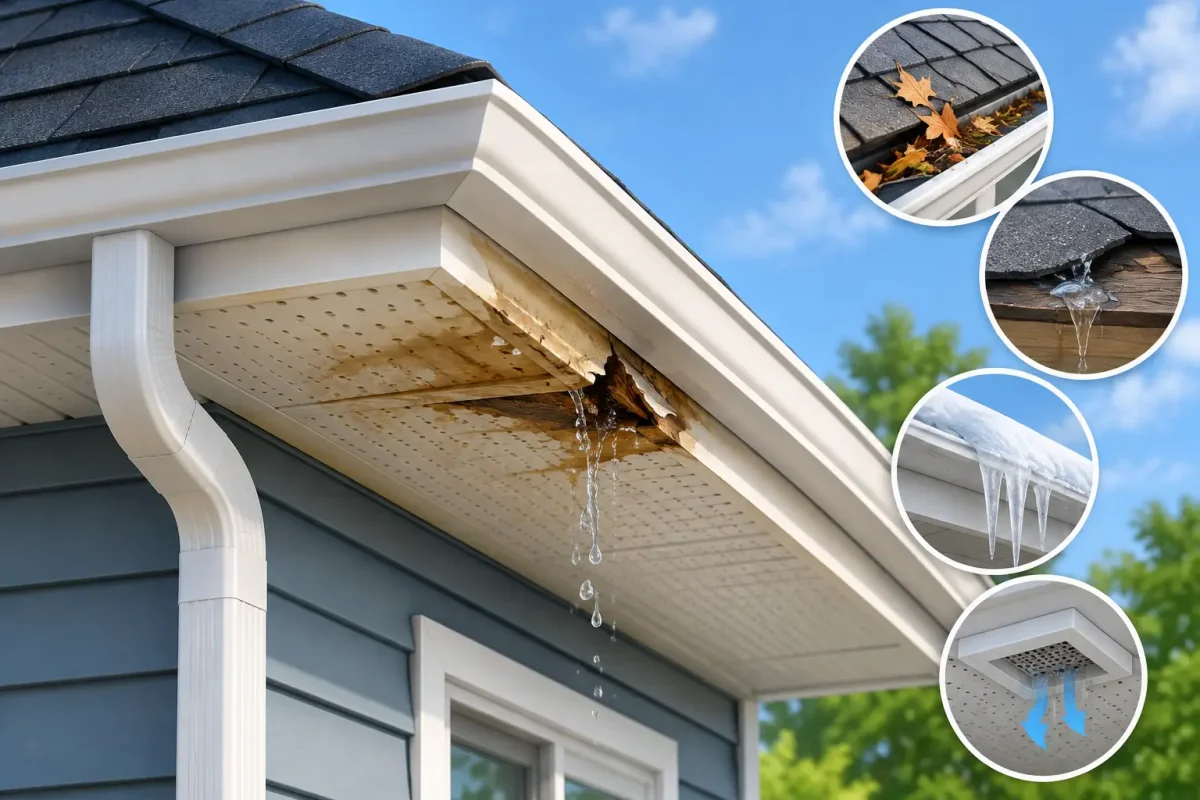
A brown stain at the edge of your roof may look like a small cosmetic issue, but soffit damage is often a warning that water is moving where it should not. So, what causes soffit water damage? In most homes, the source is a roof, gutter, flashing, or ventilation problem that allows water to reach the underside of the eaves. Finding the real source early can prevent damaged fascia, rotted roof decking, siding issues, and costly interior repairs.
Why soffit water damage needs prompt attention
Soffits are the finished panels beneath your roof overhang. They help give the eaves a clean appearance, protect exposed framing, and, when vented, allow air to move through the attic. That airflow helps control moisture and heat buildup.
When soffit panels become stained, soft, warped, or loose, the panel itself is rarely the only problem. Water may have been entering behind the gutter, backing up under shingles, or condensing inside the attic. Replacing a damaged section without correcting the cause can lead to the same problem returning after the next heavy rain or winter thaw.
For homeowners, the key is separating surface staining from an active water issue. A professional exterior inspection can trace the path of water across the roofline, gutters, fascia, soffits, and attic ventilation before repairs are planned.
What causes soffit water damage most often?
Clogged or overflowing gutters
Gutters are designed to collect roof runoff and direct it away from the home. When leaves, shingle grit, nests, or debris block the gutter or downspout, water rises instead of draining. During a hard rain, it can spill over the front edge, run behind the gutter, or soak the fascia board directly above the soffit.
Overflow behind the gutter is especially damaging because it is easy to miss from the ground. Water can sit against wood fascia, work into the joint between the fascia and soffit, and gradually rot the material behind otherwise intact-looking panels.
A gutter may also overflow when it is not clogged. Gutters that are too small for the roof area, poorly sloped, pulling away from the fascia, or fitted with inadequate downspouts may not handle heavy rainfall. The right fix depends on the roof design and drainage load, not just on cleaning out debris.
Roof leaks near the eaves
Roof leaks do not always show up as a ceiling stain. A leak near the lower edge of the roof can travel along roof decking or framing and emerge at the soffit. Missing shingles, cracked sealant, worn underlayment, damaged valleys, and exposed nail holes can all allow water into this area.
The eaves are particularly vulnerable because they receive a high volume of runoff. If water gets beneath the shingles, it may follow the decking down to the roof edge before dripping into the soffit cavity. By the time the soffit shows discoloration, the roof deck or fascia may already be damp or deteriorating.
Wind-driven rain can make a small roof weakness more obvious. If staining appears only after storms from a certain direction, that detail can help identify whether flashing, shingles, siding transitions, or roof edges are involved.
Failed drip edge or flashing
Drip edge is a thin metal component installed along roof edges to guide water away from the fascia and into the gutter. When it is missing, bent, incorrectly installed, or covered improperly by roofing materials, water can cling to the roof edge and run behind the gutter.
Flashing failures around chimneys, walls, skylights, and roof transitions can also send water toward the eaves. The stain may appear at the soffit, but the point where water first enters may be several feet higher up the roof.
This is why a contractor should inspect the entire water path rather than replacing only the visibly affected soffit panel. Proper roof-edge details protect the new materials and help prevent hidden decay.
Ice dams and repeated freeze-thaw cycles
In areas with cold, snowy winters, ice dams are a common answer to what causes soffit water damage. Heat escaping from the home can melt snow higher on the roof. The water then reaches the colder eaves and refreezes, creating a ridge of ice that blocks further runoff.
As more snow melts, water can back up beneath shingles and enter the roof assembly. It may wet insulation, roof decking, fascia, and soffits before it becomes visible outside. Icicles can be dramatic, but they are not always proof of an ice dam. The more concerning signs are water stains near the exterior walls, peeling paint, swollen soffit material, or leaks during a thaw.
Removing visible ice may reduce immediate weight and overflow, but it does not solve the underlying cause. Long-term prevention may involve improving attic air sealing, insulation, ventilation, roofing underlayment, or roof-edge drainage details. The right approach depends on how the home is built and where heat loss is occurring.
Poor attic ventilation and condensation
Not all soffit moisture comes from rain. Warm, humid indoor air can enter the attic through gaps around light fixtures, plumbing penetrations, attic hatches, and other openings. When that moisture hits cold surfaces in winter, it condenses.
If the attic does not have balanced intake and exhaust ventilation, moisture may linger and collect on the underside of roof decking. Over time, it can contribute to mold growth, damp insulation, rusted fasteners, and water staining at the soffits.
Vented soffits are part of the attic ventilation system, but they only work when air can move freely from the soffit into the attic and out through appropriate exhaust vents. Insulation that blocks soffit vents, missing baffles, or an unbalanced vent layout can reduce airflow. More vent openings are not automatically better if the system is not designed as a complete path for air movement.
Damaged fascia, siding, or exterior trim
Fascia sits directly behind the gutter and above the soffit, so damage there often leads to soffit problems. Rotten fascia can no longer hold gutter fasteners securely, allowing the gutter to sag and drain poorly. Water can then repeatedly reach the soffit edge.
Cracked siding, failed caulking around trim, and gaps where a porch roof meets the wall can also direct water behind exterior finishes. In these cases, a soffit repair may need to be coordinated with fascia, siding, or roofing work. Addressing connected components together usually offers better protection than making isolated patch repairs.
Signs the problem may be more than cosmetic
A small stain does not always mean extensive structural damage, but several signs should prompt a timely inspection. Watch for peeling paint, bubbling finishes, soft or crumbling wood, sagging gutter sections, black spotting, rusty fasteners, dripping after rainfall, or birds and insects entering gaps at the roofline.
Vinyl and aluminum soffits can hide water damage behind them. If panels are bowed, loose, or repeatedly stained, the framing or fascia behind them may need attention. Wood soffits tend to show rot more clearly, while composite and metal products can conceal the source until water has traveled farther.
Inside the home, look for attic insulation that appears wet or compressed, a musty attic smell, frost on roof nails during cold weather, or staining near exterior-wall ceilings. These clues can point to condensation, ice dams, or a roof leak rather than a gutter issue alone.
What a proper repair should include
A lasting repair begins with identifying where water starts, where it travels, and what material has been affected. The repair may be simple if a loose gutter or localized flashing issue is caught early. If water has damaged fascia boards, roof decking, or attic insulation, the scope may be broader.
A qualified exterior contractor should inspect the roof condition, gutters and downspouts, fascia, soffit panels, drip edge, flashing, siding transitions, and visible attic ventilation. Any rotten substrate should be replaced before new soffit material is installed. Covering soft wood with new aluminum or vinyl may improve appearance temporarily, but it does not restore a solid mounting surface or stop moisture from spreading.
Material choice also matters. Aluminum soffit is durable, low-maintenance, and available in vented and solid profiles. Vinyl can be a practical option in the right application. The best choice depends on the existing exterior, ventilation needs, roofline design, and the condition of the surrounding fascia and siding.
When to schedule an inspection
Call for an inspection if your soffits are actively dripping, sagging, soft to the touch, or showing stains that return after rain. Do the same if gutters are pulling away from the roofline, water is overflowing regularly, or you have noticed attic moisture after winter weather.
Homeowners should avoid climbing ladders or pulling at loose soffit panels to investigate. Damaged eaves can be unstable, and the visible panel may be concealing wet wood or a compromised gutter attachment. A trained crew can inspect the area safely and recommend whether the repair is limited to drainage, roofing, ventilation, or a coordinated exterior update.
Your soffits should quietly protect the roofline, not signal trouble every time it rains. Acting on early staining or overflow gives you the best chance to correct the water path before a manageable repair becomes a larger exterior project.
25 October 2026
Why Are Gutters Leaking? 8 Common Causes

25 October 2026