A stone accent can make a plain front elevation look finished, add weight around an entryway, or give a chimney a more substantial appearance. But homeowners also need an exterior material that can handle weather, require reasonable upkeep, and not turn a simple upgrade into a long masonry project. This Versetta Stone review looks at where this panelized stone veneer performs well, where it falls short, and what to consider before putting it on your home.
Versetta Stone is designed to provide the look of traditional stone without the full masonry installation process. Instead of setting individual stones in mortar, installers fasten interlocking panels and matching corner pieces to the wall. That difference affects the installation timeline, the appearance, the budget, and the long-term performance of the finished project.
What This Versetta Stone Review Covers
Versetta Stone is a manufactured, mortarless stone veneer system. Its panels are intended to create the texture and shadow lines people expect from stone, while allowing for a faster installation than field-laid masonry. It is commonly used as an accent material on lower walls, front entries, gables, columns, fireplaces, and exterior feature areas.
For many homeowners, the biggest appeal is straightforward: it delivers a high-end look without committing to a full stone facade. A carefully planned accent can break up a large siding wall, give the entrance more definition, and improve curb appeal without overwhelming the rest of the exterior.
That said, it is not the right choice for every wall or every budget. The final result depends heavily on proportion, trim details, flashing, and installation quality. Stone veneer is visible from the street, so small layout errors can be much more noticeable than they would be with standard lap siding.
The look: more dimensional than flat alternatives
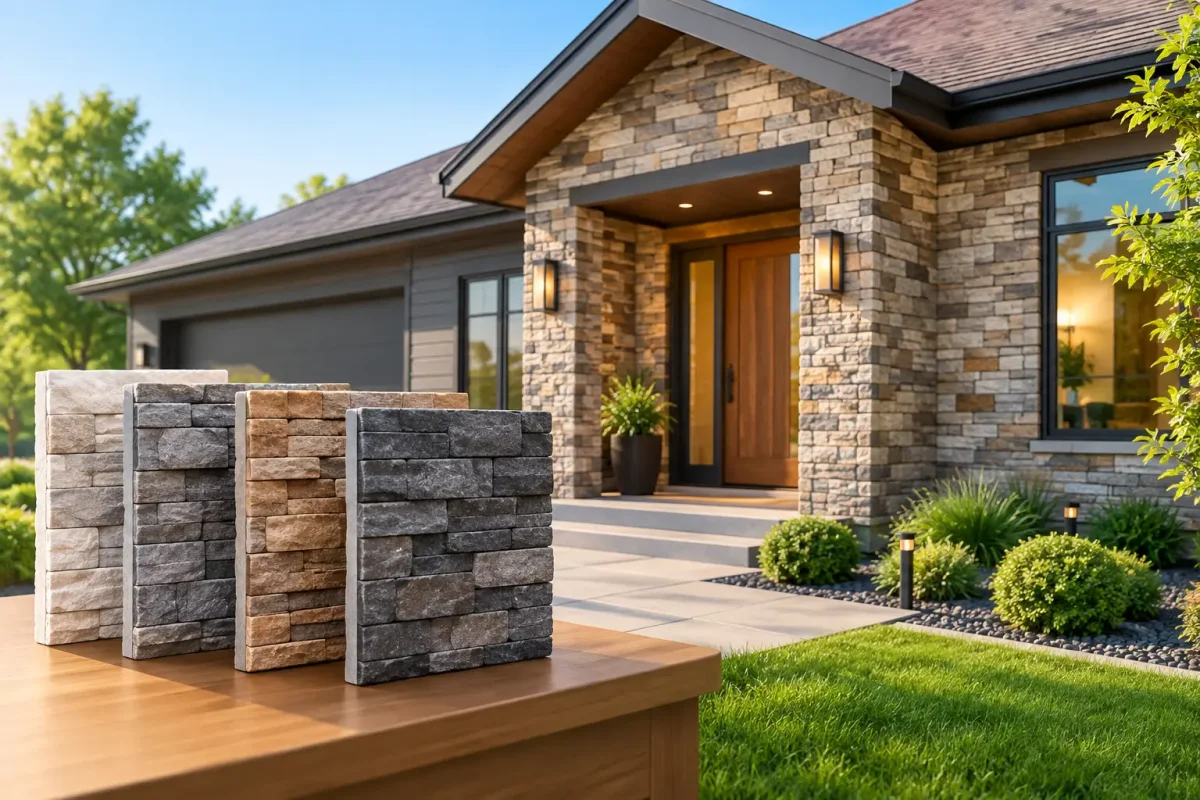
Versetta Stone panels have real depth and a textured surface, which gives them a more substantial appearance than many flat stone-look products. The panel format also helps create consistent joint patterns across a large area. When paired with clean trim, siding, and a coordinated front door, it can make an older exterior feel more intentional.
The material tends to work best as part of a complete exterior plan. For example, a stone wainscot beneath new siding, a stone surround at the entry, or matching stone details on a front-facing garage can create a balanced result. Covering a small, isolated patch without considering the roofline, windows, and existing finishes can look added on rather than integrated.
Color selection matters as much as the stone profile. A blend with warm brown or beige tones may suit traditional brick and earth-tone roofing. Cooler gray blends often pair well with black, charcoal, white, or modern siding colors. Samples should be viewed outdoors, not just under showroom lighting, because natural light can noticeably change how the color reads.
Durability: strong material still needs proper wall preparation
A properly installed stone veneer system is built for exterior use and can hold up well against normal weather exposure. Unlike natural stone masonry, it does not rely on a mortar bed between individual stones, which removes one common point of maintenance. The panels are also designed to interlock, helping create a continuous finished surface.
Still, durability is never only about the visible cladding. The wall behind it must be correctly prepared. Water-resistive barriers, flashing, clearances from roofing and grade, and properly detailed transitions around windows and doors all matter. If water gets behind any exterior cladding and cannot drain properly, the wall assembly can be at risk – whether the surface is stone, vinyl, fiber cement, or wood.
This is why a stone installation should not be treated as a cosmetic nail-on job. A qualified exterior contractor checks the substrate, identifies any existing moisture concerns, and plans the details before panels go up. If siding, eavestroughs, or windows near the project area are already failing, addressing those issues at the same time can prevent a new stone feature from being installed over an underlying problem.
Versetta Stone Review: Installation and Cost Factors
The mortarless panel design can reduce labor compared with traditional stone masonry, especially on straightforward walls. There is no need to install stones one at a time or wait for mortar joints to cure. This can make Versetta Stone a practical choice when homeowners want a noticeable exterior upgrade within a tighter project schedule.
However, faster does not mean effortless. Installers still need to start from a level base, establish clean layout lines, cut panels accurately around openings, integrate corners, and manage trim transitions. A front wall with several windows, light fixtures, hose bibs, or changes in plane will take more planning than a simple rectangular section.
Cost varies based on the selected style, wall size, height, access, number of corners, amount of cutting, and the condition of the existing exterior. Removing old materials or repairing sheathing and framing can add to the scope. Matching stone around a garage or on a two-story gable also requires more labor than an easy-to-reach entry accent.
The best way to compare estimates is to make sure they cover the same work. A meaningful quote should clarify surface preparation, moisture management details, panel and corner materials, trim or transition pieces, removal and disposal, cleanup, and warranty coverage. A lower number may leave out important components that protect the wall and make the installation look complete.
Maintenance: low effort, not no effort
Versetta Stone is generally a low-maintenance exterior finish. It does not require regular painting or mortar-joint repairs. In most cases, seasonal visual checks and gentle cleaning are enough to keep it looking good.
Avoid aggressive pressure washing, harsh chemical cleaners, or abrasive tools that could damage the finish. If dirt or mildew appears, use a method appropriate for the manufacturer’s care instructions and address nearby conditions that may be causing persistent moisture, such as overflowing gutters or vegetation pressed against the wall.
Homeowners should also inspect caulking and flashing around adjacent windows, doors, trim, and roof intersections. Those components are part of the overall water-management system. Keeping gutters clear and directing downspouts away from the foundation helps protect the entire exterior, not just the stone veneer.
Potential drawbacks to consider
Versetta Stone costs more than basic vinyl siding, so it is usually better suited to focal areas than a budget-driven whole-home cladding project. If your main goal is replacing large amounts of worn siding at the lowest possible cost, a stone accent may need to be limited or postponed.
It also has a distinctive, dimensional appearance that is not right for every home style. A very minimalist design may look better with clean-panel siding, wood accents, or smooth architectural finishes. On the other hand, a traditional home can look overly busy if stone is used on too many disconnected areas.
Repairs deserve consideration as well. Individual panels can be replaced when necessary, but matching an older installation may be more complicated if a particular color blend or profile changes over time. Keeping a few extra pieces after installation can be a smart precaution for future repairs.
Where Versetta Stone Works Best
Versetta Stone is often most effective where it has a clear architectural purpose. It can anchor the bottom portion of a front facade, create a strong entry surround, add definition to a chimney, or upgrade the base of prominent columns. These applications give the stone enough visual presence to matter without covering the home in competing textures.
It is especially worth considering during a coordinated exterior renovation. New siding, soffit and fascia, eavestroughs, windows, and stone veneer all meet at edges and transitions. Planning them together helps produce cleaner lines, consistent colors, and fewer future disruptions. It can also be more efficient than replacing one component now and removing or reworking it later for the next project.
For homeowners in areas with freeze-thaw conditions and changing seasonal weather, the installation details are the deciding factor. Choose a contractor who understands exterior wall systems, not just the appearance of stone. Ask how the wall will be prepared, how flashing will be handled, and what warranty applies to both materials and labor.
A stone accent should make your home look more finished while helping protect the wall behind it. The right design, the right materials, and careful installation are what turn that goal into an upgrade you will still feel good about years from now.
18 November 2026
Seamless Versus Sectional Gutters Compared

18 November 2026