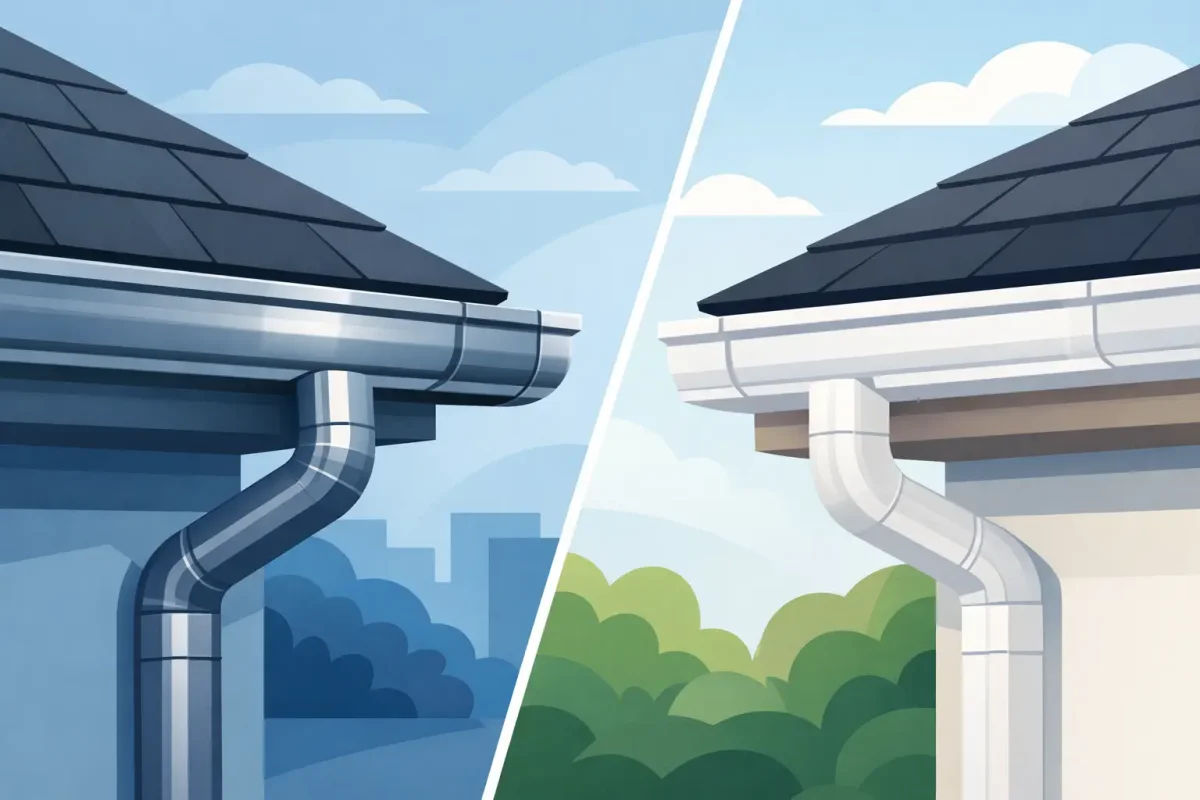
A sagging gutter, a leaking corner, or water spilling beside the foundation can turn a small exterior issue into expensive damage. When comparing aluminum versus vinyl eavestroughs, the right choice comes down to your climate, roofline, budget, and how long you expect the system to perform without trouble.
For most homes, aluminum is the stronger long-term choice. Vinyl can be an affordable option in mild conditions, but it has limits that homeowners should understand before installation. A properly sized, professionally installed eavestrough system does more than move rainwater. It protects your siding, soffit, fascia, landscaping, basement, and foundation.
Aluminum Versus Vinyl Eavestroughs: The Main Difference
Aluminum eavestroughs are lightweight metal channels that can be formed on-site to match the exact length of your roofline. This creates a seamless run with fewer joints, which means fewer common leak points. They are available in many baked-on colors and can be paired with matching soffit, fascia, and downspouts for a cleaner exterior finish.
Vinyl eavestroughs are usually sold in pre-cut sections that connect with fittings at corners and along longer runs. They are inexpensive, easy to handle, and naturally resistant to rust. However, the connection points require careful installation and can become more vulnerable as the material expands, contracts, or becomes brittle over time.
Neither material fixes a drainage problem on its own. Correct slope, secure hangers, properly placed downspouts, and safe discharge away from the house matter just as much as the eavestrough material.
Durability in Heat, Cold, and Heavy Rain
Weather is where the differences become clear. Aluminum handles changing temperatures well and maintains its shape under normal seasonal movement. It will not rust, although its finish can fade or chalk after many years of direct sun exposure. It can also dent from ladders, falling branches, or hard impacts, but a quality installation with adequate hanger spacing helps it stand up to regular weather.
Vinyl does not corrode, and it can work reasonably well in consistently mild climates. The concern is temperature swing. Vinyl expands in heat and contracts in cold, which can stress seams and fasteners. In freezing conditions, it may become more brittle and more likely to crack if ice, snow, or a ladder puts pressure on it.
Heavy rainfall is another practical consideration. Aluminum seamless eavestroughs are commonly available in larger profiles, allowing the system to carry more water off a broad or steep roof. For homes with long roof runs, valleys that concentrate runoff, or recurring overflow during storms, capacity and installation quality should take priority over the lowest material price.
What about ice and snow?
No eavestrough material is immune to ice dams. Ice forms when heat loss from the home melts roof snow, then the water refreezes near the colder eaves. Aluminum is generally better equipped to remain stable under normal winter conditions, while vinyl is more prone to stress and cracking when temperatures drop sharply.
The best defense is a complete approach: adequate attic insulation and ventilation, secure gutters, clear downspouts, and roof details that manage water correctly. Replacing eavestroughs without addressing loose fascia or roof drainage issues can leave the original problem in place.
Cost: Upfront Price Versus Long-Term Value
Vinyl usually has the lower material cost. For a small, simple roofline in a mild area, it can be a practical budget-focused choice. Because vinyl systems come in sections, however, the final project cost can rise once you account for connectors, corners, hangers, downspouts, and labor.
Aluminum often costs more initially, especially when it is custom-formed on site. The added investment commonly pays off through a longer service life, fewer seams, better color options, and a more finished appearance. It is also easier to match aluminum eavestroughs with other exterior upgrades, such as aluminum fascia, soffit, siding trim, and downspouts.
Homeowners should be cautious about comparing quotes by linear foot alone. A low number may not include removal and disposal of old material, fascia repairs, new downspouts, splash protection, or the number of hangers needed to keep the system secure. Ask what is included and whether the contractor has inspected the roof edge and drainage path.
Maintenance and Repair Expectations
Both aluminum and vinyl eavestroughs need regular attention. Leaves, shingle grit, seed pods, and debris can block water flow regardless of the material. A clogged downspout can cause overflowing water that stains siding, damages fascia, and pools near the foundation.
Aluminum is easier to maintain as a continuous system because seamless runs have fewer joints to inspect. Over time, sealant at corners, end caps, and downspout outlets may need repair. Dents can sometimes be cosmetic, but deep dents that restrict water flow should be corrected.
Vinyl systems have more connection points, so leaks at seams are a more common maintenance item. Sun exposure can also discolor vinyl, and a cracked section often needs replacement rather than repair. If an older vinyl system is repeatedly pulling away from the fascia or separating at the joints, replacement with a properly supported aluminum system may be more cost-effective than another patch.
Gutter guards can reduce the amount of debris entering either system, but they are not maintenance-free. The best option depends on nearby trees, roof pitch, and the type of debris around your property. A professional inspection can determine whether guards will help or simply create another surface that needs periodic cleaning.
Appearance and Curb Appeal
Eavestroughs are functional, but they are visible from the street. Aluminum gives homeowners more options to coordinate the color with siding, trim, roofing, or windows. Its clean lines and seamless appearance can make a noticeable difference on updated homes, particularly when paired with new soffit and fascia.
Vinyl is typically available in a more limited range of colors and profiles. White remains common because it is easy to source and blends with many exteriors, but it may not provide the custom look homeowners want during a larger renovation.
If curb appeal is part of the project, consider the entire roof edge rather than the gutters alone. Worn fascia boards, vented soffit, peeling trim, and mismatched downspouts can make a new eavestrough system look incomplete. Coordinating these elements creates a more durable and polished result.
When Vinyl Eavestroughs Can Make Sense
Vinyl is not automatically the wrong material. It can make sense for a budget-conscious homeowner with a short, uncomplicated roofline in a mild climate. It may also suit a detached shed, garage, or temporary solution where appearance and long-term durability are less important.
The key is setting realistic expectations. Vinyl is best chosen because it fits the specific property and conditions, not simply because it has the lowest purchase price. A home exposed to freezing winters, intense sun, heavy rain, or frequent tree debris usually benefits from aluminum.
Why Professional Installation Matters More Than Most Homeowners Expect
An eavestrough can be made from excellent material and still fail if it is installed poorly. Incorrect slope allows standing water. Too few hangers lead to sagging. Loose fasteners can damage fascia. Downspouts that empty too close to the house can send water directly toward the foundation.
A qualified contractor should inspect the roof edge, identify soft or damaged fascia, calculate the right eavestrough size, and determine where downspouts will move water safely away from the home. The work should also include secure fastening, sealed connections, clean cleanup, and a final walkthrough so you know how the system performs.
Petra Eavestrough & Siding approaches gutter replacement as part of the home’s full exterior protection system. That matters when eavestrough concerns overlap with aging soffit, fascia, siding, or roofing details.
For most homeowners seeking a clean look and dependable protection, aluminum eavestroughs are the better investment. Choose the system that fits your weather exposure and roof drainage needs, then make sure it is installed to keep water where it belongs: safely away from your home.
11 August 2026
Storm Damaged Siding Repair Starts With an Inspection
11 August 2026