A wet basement, peeling fascia, and a trench forming beside the foundation often start with the same overlooked problem: water is not leaving the roofline the way it should. An eavestrough drainage inspection checks the full path water takes from your roof to a safe discharge point, helping catch small failures before they become expensive exterior repairs.
For homeowners, this is not just a matter of clearing leaves out of a gutter. A system can look clean from the ground and still drain poorly because of an incorrect slope, a loose joint, a crushed downspout, or water dumping too close to the house. A proper inspection identifies where the system is failing and what needs to be corrected.
What an Eavestrough Drainage Inspection Checks
Eavestroughs are designed to collect rainwater at the roof edge, carry it along the fascia line, and direct it through downspouts away from the home. Every part of that route matters. If one section is blocked, loose, undersized, or improperly installed, water can back up where it does not belong.
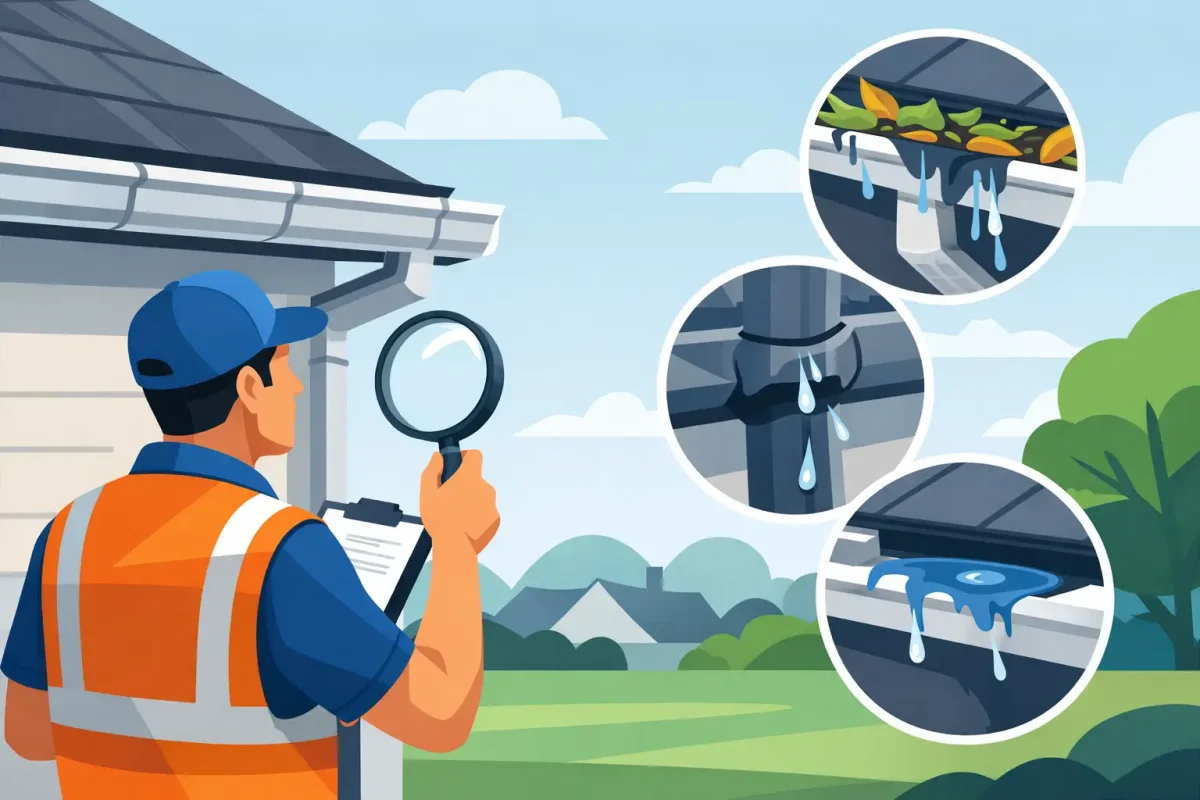
An inspection starts at the roofline. The contractor looks for standing water inside the troughs, organic buildup, shingle grit, and signs that water has been spilling over the front or back edge. Overflow on the front can stain siding and damage landscaping. Overflow behind the eavestrough is more serious because it can soak the fascia board, soffit, and roof decking.
The condition of the eavestrough itself also matters. Seams, corners, end caps, hangers, and outlet openings are common trouble spots. Even a small leak can repeatedly wet the same area of siding or trim, causing paint failure, wood rot, or hidden moisture damage over time.
From there, the inspection follows each downspout. The goal is to confirm that water enters freely, moves through without obstruction, and exits far enough from the foundation. Downspouts that stop at the base of the wall, drain onto a paved surface that slopes back toward the house, or discharge into a clogged extension can create foundation moisture problems even when the eavestroughs themselves are in good condition.
The Drainage Problems Homeowners Miss
Most eavestrough problems do not announce themselves during a light rain. They show up during a heavy storm, when the system is handling the amount of water it was built for. That is why visual inspection should be paired with a practical assessment of slope, capacity, and discharge.
Improper Slope and Standing Water
Eavestroughs need a subtle pitch toward the downspout. Too little slope leaves standing water, which attracts debris, increases corrosion risk, and puts extra weight on hangers. Too much slope can look uneven from the street and may cause water to move too fast past an outlet during intense rainfall.
A homeowner may notice water sitting in a trough days after a storm or see a section pulling away from the fascia. Both can point to drainage and support issues. Refastening a loose section without correcting the slope may only delay the same problem.
Clogs Beyond the Visible Opening
Leaves and twigs are obvious, but many clogs form where you cannot see them. Debris often collects at the downspout outlet or inside elbow joints. Shingle granules can also build up in older roof systems, creating a dense blockage that restricts flow.
Water may spill over several feet away from the actual clog. That is why simply cleaning the section where overflow is visible does not always solve the problem. The entire run and every downspout need to be checked.
Leaks at Seams, Corners, and End Caps
Seamed eavestrough systems are especially vulnerable at joints. Seasonal expansion, ice, debris weight, and aging sealant can open small gaps that leak only during sustained rain. Corners and end caps are often affected first because they carry more water pressure and debris.
Seamless aluminum eavestroughs reduce the number of potential leak points along long runs, but they still require properly sealed corners, secure outlets, and sound installation. Material alone cannot compensate for poor slope or inadequate drainage planning.
Downspouts That Drain Too Close to the Home
A working downspout is not necessarily a properly draining downspout. Water needs to be directed away from the foundation, not released where it can pool beside it. This is especially important on lots with flat grading, compacted soil, walkways, or landscaping features that trap runoff near the house.
The right solution depends on the property. It may involve a downspout extension, a revised discharge location, improved grading, or coordination with an existing drainage system. The objective is simple: keep roof runoff moving away from the building envelope.
Why Drainage Problems Affect More Than Eavestroughs
Water follows the easiest path. When an eavestrough cannot control it, nearby exterior components take the impact. That can mean soaked fascia, stained siding, deteriorated soffit, erosion around flower beds, and moisture against the foundation.
In cold-climate areas, poor drainage can also contribute to ice buildup. If water sits in the trough or backs up along the roof edge, freeze-thaw cycles add weight and stress to the system. Heavy ice can pull eavestroughs loose, bend downspouts, and expose vulnerable roof-edge materials.
There is also a curb appeal issue. Black streaks on siding, rust marks, sagging troughs, and visibly crooked downspouts make an otherwise well-kept home look neglected. Addressing drainage early is usually cleaner, faster, and less disruptive than repairing damaged trim or siding later.
When to Schedule an Eavestrough Drainage Inspection
An annual inspection is a practical baseline, particularly after fall leaf drop and before the heaviest spring rains. Homes surrounded by mature trees, properties with complex rooflines, and older eavestrough systems may need more frequent attention.
Do not wait for a routine visit if you see warning signs. Overflow during rain, water stains under the roof edge, sagging sections, loose brackets, leaking corners, peeling paint near the fascia, or wet ground beside the foundation all justify a closer look.
A drainage inspection is also worthwhile before a larger exterior project. If you are replacing siding, soffit, fascia, or roofing, the eavestrough system should be evaluated at the same time. These components work together. Installing new siding while leaving a leaking eavestrough above it can put a new investment at risk.
Repair, Replacement, or a Better Drainage Layout?
Not every inspection leads to replacement. A localized leak, a minor slope correction, or a blocked downspout may be repairable if the rest of the system is secure and in good condition. Small repairs can make sense when the eavestrough material is sound and the drainage layout is otherwise effective.
Replacement becomes the better value when there are widespread leaks, repeated sagging, extensive corrosion, damaged fascia behind the troughs, or a system that was poorly sized or planned from the beginning. A new installation gives the contractor an opportunity to correct slope, improve downspout placement, and match the system to the roofline and exterior finishes.
For homes undergoing a broader exterior update, coordinating eavestroughs with soffit, fascia, siding, and roofing work can avoid duplicated labor and mismatched materials. It also provides a clearer view of hidden areas that may have been affected by long-term water exposure.
What a Professional Inspection Should Leave You With
A useful inspection does more than point out dirt in the troughs. You should understand what is working, what is not, and whether the issue needs immediate correction or routine maintenance. The recommendation should distinguish between a simple cleanup, a targeted repair, and a replacement that solves recurring drainage failures.
At Petra Eavestrough & Siding, that means looking at the roof edge, eavestroughs, downspouts, fascia, and surrounding drainage conditions as connected parts of your home’s exterior. The goal is not to sell work you do not need. It is to prevent roof runoff from damaging the areas that protect your home every day.
If rainwater is spilling, pooling, staining, or draining toward the house, acting before the next major storm can protect far more than your eavestroughs. A clear inspection and the right repair plan can keep water moving where it belongs: away from your home.

20 August 2026
Siding Color Selection That Fits Your Home

20 August 2026