
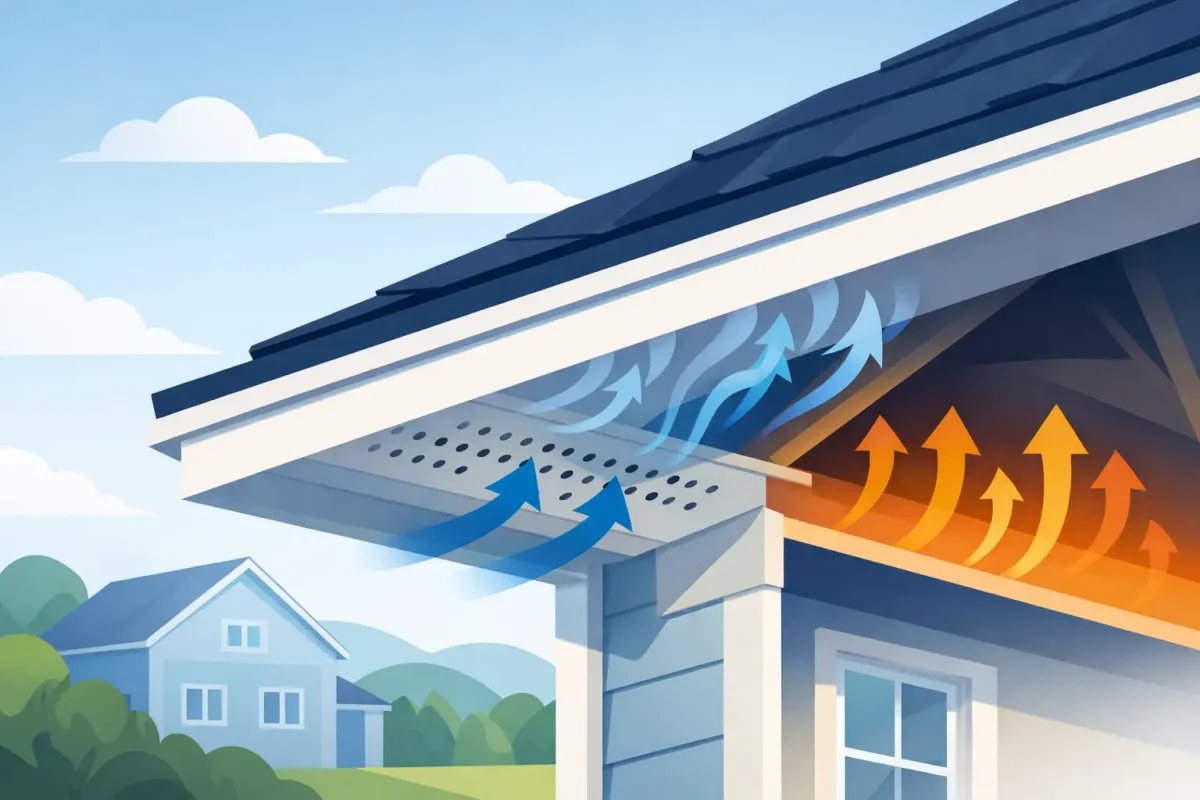
A roof can look perfectly fine from the driveway while moisture and trapped heat are building up underneath it. That is why homeowners often ask, what does soffit ventilation do? The short answer: it supplies fresh air to the attic at the lowest part of the roofline, helping the entire roofing system manage heat and moisture before they cause expensive damage.
Soffit vents are not a cosmetic detail. They are a working part of your home’s exterior protection system, alongside the roof, fascia, insulation, gutters, and exhaust vents near the roof peak. When these components are installed and balanced correctly, they help keep the attic drier, the roof deck healthier, and indoor comfort more consistent.
What does soffit ventilation do in an attic?
Soffit ventilation provides intake air. The soffit is the finished underside of the roof overhang, where the roof extends beyond the exterior walls. Vented panels, perforated aluminum, or individual intake vents allow outside air to enter this area and move into the attic.
That air needs a way out. In a properly designed system, warmer air rises and exits through ridge vents, roof vents, or other exhaust vents higher on the roof. This creates continuous airflow from the eaves to the peak.
The goal is not to make your attic cold in winter or hot in summer. The goal is to reduce the conditions that create trouble: excessive heat, humid air, condensation, and uneven roof temperatures. A balanced system needs both intake and exhaust. Adding more roof exhaust without enough soffit intake can restrict airflow instead of improving it.
Why attic airflow protects your home
An attic deals with a lot more than most homeowners realize. Warm indoor air can find its way upward through gaps around light fixtures, attic hatches, plumbing penetrations, and other openings. In colder months, that warm air can carry moisture into a much cooler attic.
When humid air meets cold roof sheathing, condensation can form. Over time, that moisture may lead to staining, mold growth, damp insulation, wood deterioration, and rusted fasteners. Soffit ventilation helps carry moisture out before it has the chance to stay trapped against the roof structure.
During warm weather, ventilation also helps release superheated attic air. It will not replace good insulation, air sealing, or an efficient HVAC system, but it can reduce the heat buildup that puts added stress on your roofing materials and makes upper rooms harder to cool.
For homes in areas with cold winters and regular snow, ventilation plays another important role: helping maintain a more even roof temperature. When heat escapes from the living space into the attic, it can warm the roof deck and melt snow above it. The meltwater can refreeze near the colder eaves, where it forms ice dams. These ridges of ice can force water back under shingles and into the home.
Ventilation alone does not solve every ice dam problem. Air leaks and inadequate insulation are often the main causes. Still, a clear, balanced soffit-to-ridge airflow path is part of a reliable long-term solution.
Soffit ventilation works best with insulation and air sealing
Homeowners sometimes assume that more attic ventilation is always better. In reality, performance depends on the whole assembly.
If insulation is pushed tightly against the underside of the roof near the eaves, it can block the intake path from the soffit vents. The vents may look open from outside, but little to no air may be reaching the attic. This is why contractors use attic baffles or vent chutes. These channels preserve the airflow space between the soffit and the attic while keeping insulation where it belongs.
Air sealing matters just as much. If warm, moist household air is leaking heavily into the attic, ventilation has to work harder to manage a problem that should have been prevented at the source. Sealing attic bypasses, maintaining proper insulation depth, and confirming clear soffit intake vents all support the same outcome: a dry, stable attic environment.
A professional inspection can identify whether the problem is blocked soffits, insufficient exhaust, poor insulation coverage, roof leaks, or a combination of issues. Treating the visible symptom without finding the cause can lead to repeat repairs.
Signs your soffit ventilation may need attention
You do not need to climb onto the roof to notice every ventilation problem. Some warning signs show up inside the home or around the exterior.
Watch for these common issues:
- Frost, dampness, dark staining, or mold-like growth on attic sheathing
- A musty odor in the attic or upper level of the home
- Insulation that looks wet, flattened, or discolored
- Ice dams along the eaves during winter
- Peeling paint, moisture damage, or rot around fascia and soffit areas
- Upstairs rooms that are unusually hot during summer
- Prematurely aging shingles, curling edges, or a roof that appears to wear unevenly
None of these signs automatically proves that ventilation is the only issue. A roof leak, plumbing leak, bathroom fan vented into the attic, or failing eavestrough system can produce similar moisture symptoms. That is why the inspection should look at the entire roof edge and attic system instead of focusing on one component.
Common soffit ventilation problems
The most frequent problem is blocked intake. Insulation can cover interior openings, old paint can clog perforated panels, and debris or insect nests can restrict exterior vents. In some older homes, soffits were installed with little or no ventilation at all.
Another issue is mismatched intake and exhaust. A roof may have several box vents or a ridge vent, but too little open soffit area to feed them. Exhaust vents cannot pull air effectively if there is nowhere for replacement air to enter. In some cases, the attic begins drawing conditioned air from the home through gaps in the ceiling instead, which is the opposite of what you want.
Improperly vented bathroom, kitchen, or dryer exhaust ducts can also create serious moisture problems. These ducts should terminate outside, not in the attic. Adding soffit ventilation will not correct a fan that is dumping humid air directly into the roof space.
Finally, damaged fascia, loose soffit panels, and overflowing gutters can allow water into areas that should remain dry. Since the soffit, fascia, roofing, and eavestroughs meet at the roof edge, repairs should be coordinated whenever possible. Replacing only one piece without checking the surrounding materials can leave hidden damage behind.
What a professional should check
A thorough evaluation starts outside and continues into the attic. The contractor should inspect the condition of the soffit panels, fascia boards, roof edge, shingles, flashing, and gutters. They should also look for signs that water is backing up, running behind the eavestrough, or entering through damaged roof components.
Inside the attic, the key questions are simple: Is there clear intake airflow at the eaves? Is insulation blocking that path? Are baffles installed where needed? Is there enough properly placed exhaust ventilation near the roof peak? Is there evidence of condensation, leaks, mold, or damaged sheathing?
The right repair may be as focused as clearing blocked vents and installing baffles. In other cases, it may make sense to replace aging soffit and fascia while completing roof or gutter work. Coordinating the work can improve the finished appearance, reduce repeat labor, and ensure the roof edge functions as one system.
Material choice matters, too. Vented aluminum soffit is a popular option because it is durable, low-maintenance, and available in finishes that coordinate with siding, fascia, and eavestroughs. However, the best layout depends on the roof design, attic configuration, and existing exhaust ventilation – not just the appearance of the panels.
Do not treat ventilation as an afterthought
Soffit ventilation is easy to overlook because it sits under the eaves, out of sight. Yet it has a direct impact on the space above your ceilings and the roof protecting your home. When airflow is restricted, the first signs may be subtle. By the time rot, mold, or water staining is visible, the repair can be more involved.
If you are planning a roof replacement, new siding, fascia repair, or eavestrough upgrade, ask for the soffit ventilation to be assessed at the same time. Petra Eavestrough & Siding can inspect the roof edge as a complete system and recommend work that protects the home, not just the part that is easiest to see.
A dry, well-ventilated attic is not a luxury feature. It is quiet protection working above your head through every season.

31 August 2026
How Long Do Eavestroughs Last? What Changes It

31 August 2026