
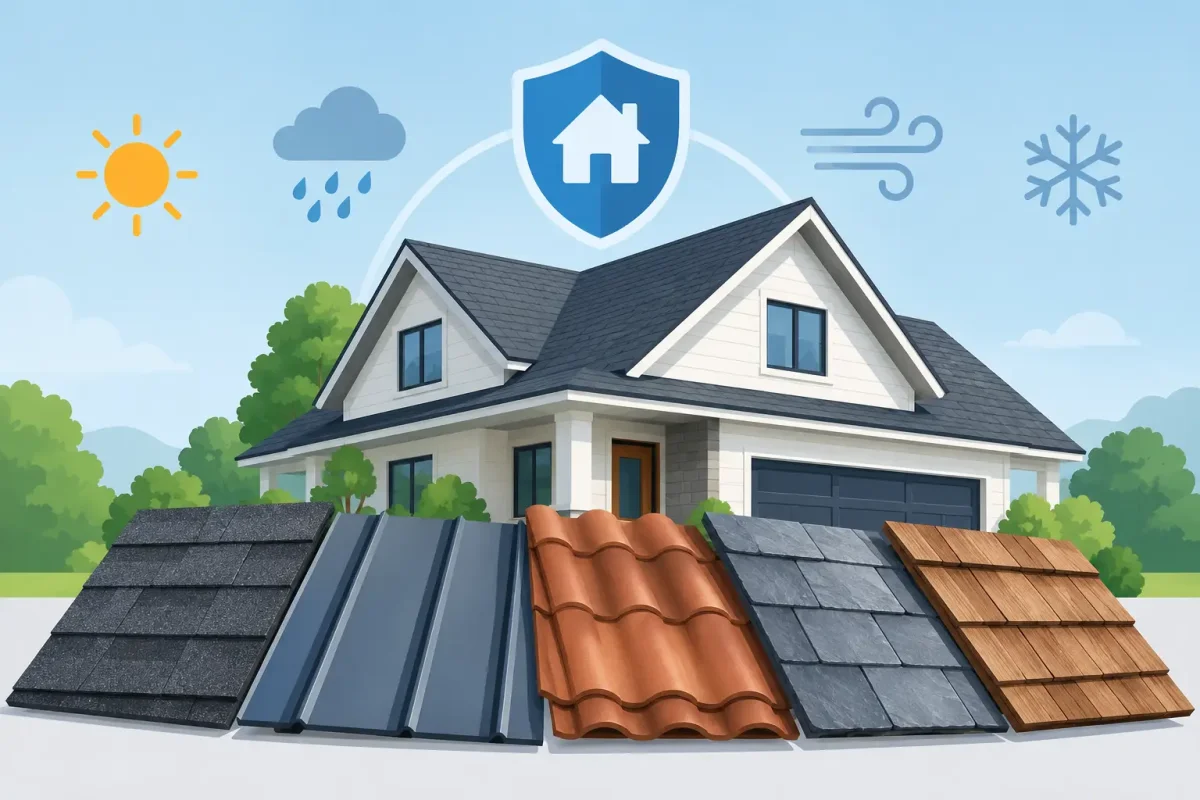
A roof can look fine from the driveway while the materials beneath its surface are nearing the end of their service life. Curled shingles, missing granules, rusted flashing, and leaks around vents are not cosmetic problems. They are early warnings that water may be finding its way into your home. Choosing the right roofing materials is about more than selecting a color. It is about protecting the structure, managing long-term costs, and making sure your home is ready for the weather it faces.
For most homeowners, the best choice comes down to the roof’s slope, the age and style of the home, local weather, budget, and how long they plan to stay in the property. A professional inspection helps turn those factors into a clear recommendation instead of a guess.
Roofing Materials: What Matters Before You Choose
Every roofing system has visible materials and critical components you may never see once the work is complete. Shingles or panels are only the outer layer. Underlayment, ice and water protection, flashing, ventilation, pipe boots, fasteners, and ridge caps all work together to keep water out and help the roof perform as designed.
That is why the lowest material price is not always the best value. A quality roof installed with incomplete flashing or poor ventilation can still fail early. On the other hand, a properly installed system can improve drainage, reduce the risk of moisture damage in the attic, and give your home a cleaner finished appearance.
When comparing options, focus on four practical questions: How well will the material handle wind, rain, heat, and winter conditions? How long is it expected to last? Does it fit the home’s appearance? And does the installation include the full system needed to protect vulnerable areas?
Asphalt Shingles: The Practical Choice for Most Homes
Asphalt shingles remain the most common residential roofing material because they offer dependable protection at a manageable cost. They come in a wide range of colors and profiles, making it easier to match siding, stone veneer, trim, and gutters during a larger exterior update.
Three-tab shingles are a basic option, but architectural shingles are generally the stronger choice for homeowners replacing a roof today. Architectural shingles have a thicker, layered design that creates more dimension and typically offers better wind performance than entry-level shingles. They also give the roof a more substantial look without the higher cost of premium materials.
Asphalt is a good fit when you want a proven material, efficient installation, and strong curb appeal. It is not maintenance-free, however. Roofs should still be checked after major storms and inspected when they approach the later part of their expected lifespan. Granule loss, lifted tabs, cracked shingles, and dark streaks should be evaluated before a small issue becomes a leak.
The trade-off is longevity. Even high-quality shingles generally will not last as long as metal, slate, or some synthetic products. But for many homeowners, the balance of cost, appearance, and reliable performance makes asphalt the right investment.
When Shingles Make the Most Sense
Choose architectural shingles when your home needs a cost-conscious replacement, your roof has a standard pitch, or you want a broad selection of colors. They are also a practical option when you are coordinating a roof replacement with new soffit, fascia, or eavestroughs and want the entire exterior to look consistent.
Metal Roofing: Long-Term Performance With a Higher Upfront Cost
Metal roofing has become more popular with homeowners looking for durability and a distinct appearance. Standing-seam metal panels create clean vertical lines and can last significantly longer than conventional shingles when installed correctly. Metal shingles and stone-coated steel products offer other style options for homeowners who prefer a more traditional profile.
The biggest advantage is long-term durability. Metal resists rot, does not rely on granules for protection, and can perform well in heavy rain and snow. It is also lightweight compared with materials such as concrete tile. Many metal systems use reflective finishes that can help reduce heat absorption, although energy performance still depends on insulation, attic ventilation, roof color, and the overall home design.
Cost is the main consideration. Metal roofing usually requires a larger upfront investment, and installation demands experience with panel layout, expansion and contraction, flashing details, and fastener placement. A poor metal installation can create noise, water-entry points, or visible alignment problems. This is not a material to select based on price alone.
Metal can be an excellent choice if you expect to remain in the home for many years, want a low-maintenance exterior, or are investing in a full exterior transformation that supports a higher-end look.
Cedar, Slate, Tile, and Synthetic Options
Some homes call for materials beyond shingles and metal. Cedar shakes bring natural warmth and texture, especially on traditional, cottage-style, or custom homes. They need more upkeep than asphalt and may not suit every climate, fire-rating requirement, or maintenance preference. Homeowners should be realistic about the care cedar requires before choosing it for appearance alone.
Slate offers a classic, high-end finish and exceptional longevity, but it is heavy and expensive. The home’s structure may need to be evaluated before installation. Repairs also require skilled handling because slate can crack if walked on improperly.
Concrete and clay tile create a distinctive look and can last for decades, but they are also heavy. They are more common in certain architectural styles and regions than others. As with slate, the roof structure must be suitable for the added weight.
Synthetic roofing materials can replicate the look of slate or cedar while reducing weight and maintenance demands. Product quality varies, so homeowners should look closely at the manufacturer warranty, impact rating, wind rating, and installation requirements. A synthetic product may solve a specific design or weight challenge, but it should be selected for proven performance, not just its appearance.
Do Not Overlook the Parts Around the Roof
A roof replacement is the right time to inspect the components that connect to it. Damaged fascia, deteriorated soffit, sagging gutters, and poorly placed downspouts can undermine the performance of a new roof. Water that misses or overflows the eavestrough can stain siding, damage landscaping, and create problems near the foundation.
Ventilation matters as well. An attic that traps excess heat and moisture can shorten shingle life and contribute to condensation problems. Intake ventilation near the soffit and exhaust ventilation near the ridge should be evaluated as a system. More vents are not automatically better. The goal is balanced airflow designed for the roof and attic layout.
Flashing deserves the same attention. Chimneys, skylights, valleys, wall intersections, vents, and pipe penetrations are common leak locations because they interrupt the roof surface. Quality flashing installation is one of the clearest differences between a roof that simply looks new and one that is built to protect the home.
How to Make a Confident Roofing Decision
Start with an on-site inspection, not a material brochure. A contractor should assess shingle condition, roof decking concerns, drainage, ventilation, flashing, penetrations, and nearby exterior components. If there is interior staining or a past leak, that information should be part of the discussion.
Then compare estimates based on scope, not just the final number. Confirm which roofing material is included, whether old materials will be removed, what underlayment and ice protection will be used, how flashing will be handled, and whether cleanup and disposal are included. Ask about workmanship coverage as well as the material warranty. They protect different parts of the investment.
It also helps to consider timing. Replacing a roof before active leaks spread gives you more control over material selection and scheduling. Waiting until water enters the home can turn a planned exterior project into a more expensive repair involving insulation, drywall, framing, or electrical work.
At Petra Eavestrough & Siding, a roof assessment can also identify whether fascia, soffit, and eavestrough work should be coordinated at the same time. Completing connected exterior work in one plan can reduce repeat disruption and deliver a cleaner final result.
The right roof is not necessarily the most expensive one. It is the system that fits your home, your weather conditions, your budget, and the level of protection you expect for the years ahead. If your roof is showing its age, a professional inspection is a practical first step toward protecting what matters underneath it.
26 September 2026
Metal Roofing Reviews: What Homeowners Should Check

26 September 2026