
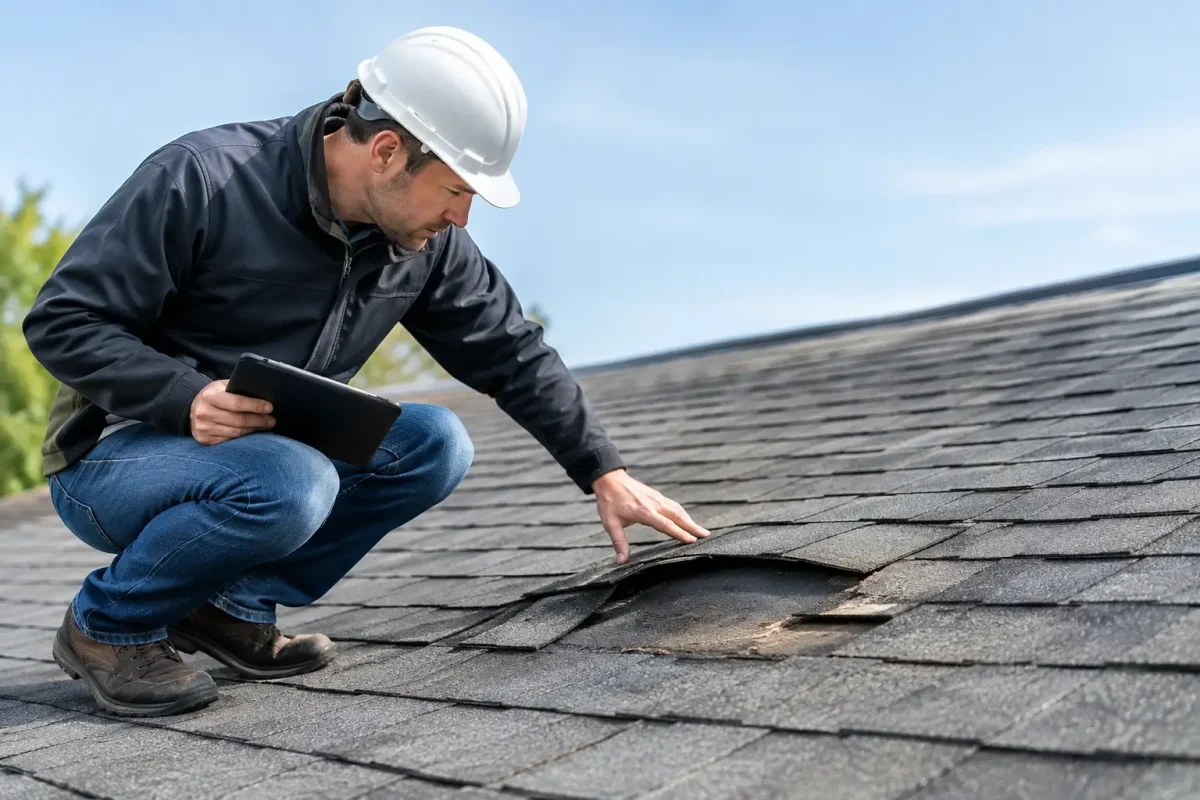
A missing shingle after a storm is easy to see. The more costly roof problems often are not. A slow leak can travel through insulation, stain a ceiling far from its entry point, and damage wood decking before you notice a drip. Knowing how to assess roof damage helps you act early, protect your home, and avoid turning a targeted repair into a larger replacement project.
For most homeowners, assessment should mean a careful ground-level review and an attic check, not climbing onto the roof. Wet, steep, or aging roofs are unsafe to walk on. A professional inspection can confirm what is happening beneath the shingles and identify the right repair before water reaches the rest of your exterior.
Start With a Safe Ground-Level Roof Check
Walk around your home in daylight, ideally after heavy rain, strong wind, or a freeze-thaw cycle. Stand far enough back to view each roof slope. Binoculars can help, but do not use them while standing on a ladder.
Look for shingles that are missing, lifted, curled, cracked, or visibly out of place. Asphalt shingles nearing the end of their service life may lose their protective granules, leaving thin or darker-looking areas that weather faster. You may also find those granules in gutters or near downspouts. A small amount is normal on a newer roof, but a heavy buildup can point to shingle wear.
Pay close attention to roof edges, ridges, valleys, and areas around chimneys, skylights, vents, and satellite mounts. These transitions rely on flashing and sealants to direct water away. If flashing is bent, rusted, separated, or covered by deteriorated caulk, water can find its way underneath even when the surrounding shingles look acceptable.
Storm damage does not always look dramatic. Wind can break the adhesive seal beneath a shingle without tearing it off. Hail may leave scattered dark spots, bruises, or pitting that is difficult to judge from the ground. If a storm has damaged nearby homes, a professional inspection is the sensible next step.
Check the Attic for Hidden Water Damage
The attic often tells a clearer story than the roof surface. Choose a dry day, bring a flashlight, and walk only on the framing or designated flooring. Avoid stepping between joists, where a misstep can damage the ceiling below.
Look for fresh water stains on rafters, roof decking, insulation, or around plumbing vents. Dark streaks, damp insulation, peeling wood layers, and a musty smell all deserve attention. Mark the location of anything suspicious so an inspector can compare the interior evidence with the roof above it.
Mold or mildew in an attic is not always caused by a roof leak. Inadequate ventilation, blocked soffit intake, or warm indoor air escaping into the attic can create condensation that looks similar to water intrusion. This is why roofing, soffit, fascia, and ventilation should be assessed as a connected system. Repairing shingles alone may not solve a moisture problem caused by poor airflow.
Look for Warning Signs Inside the Home
A roof leak may first appear in a bedroom, hallway, or upper-floor closet. Check ceilings and walls for yellow or brown stains, bubbling paint, soft drywall, or unexplained cracking near the top of a wall. A stain that grows after rain is a strong sign of active water entry.
Do not assume the visible stain is directly below the roof damage. Water follows framing members, pipes, and insulation before it reaches the ceiling. The entry point may be several feet away, particularly around valleys and roof penetrations.
Also watch for changes that seem unrelated to the roof. Drafty upper rooms, unusually high heating or cooling bills, and ice buildup along roof edges can signal insulation or ventilation issues. In colder climates, ice dams can force melting snow back beneath shingles and into the home. The right solution depends on the cause. Clearing ice may provide short-term relief, but airflow, insulation, and roof detailing may need correction to prevent it from returning.
Inspect Gutters, Fascia, and Drainage
Your gutters are part of the roof’s water-management system. If they clog, sag, overflow, or pull away from the fascia, water can back up near the roof edge and saturate the wood behind them. Look for water marks on siding, peeling paint, soft fascia boards, or erosion beneath downspouts.
After a rainfall, confirm that downspouts carry water away from the foundation. Water spilling over the front of a gutter may mean there is a blockage, but it can also mean the gutter is undersized, incorrectly pitched, or overwhelmed by roof runoff. These details matter because recurring water exposure can damage the roof edge, soffit, siding, and foundation area at the same time.
If gutters are full of shingle granules, take note of the amount and whether it keeps increasing. It is one of several clues a contractor uses when determining whether a roof has years of service left or is approaching replacement.
Know Which Roof Damage Needs Fast Action
Some roof issues can be scheduled promptly. Others should be treated as urgent. Arrange professional service as soon as possible if you see active dripping, a ceiling bulge, a large section of missing shingles, exposed roof decking, storm debris that has punctured the roof, or sagging along the roofline.
A sagging roofline is especially serious. It can indicate water-damaged decking, structural movement, or a long-term moisture issue. Keep people away from the affected area and do not place weight on the roof or ceiling.
For a minor, contained stain with no active leak, you may have time to schedule an inspection rather than make an emergency call. Still, it should not be ignored. Water damage rarely fixes itself, and a small repair is usually more affordable before repeated wetting affects framing, insulation, and interior finishes.
How to Assess Roof Damage After a Storm
After wind, hail, or heavy rain, begin with a photo record from the ground. Photograph missing shingles, fallen branches, damaged gutters, loose flashing, and any new interior stains. Note the date of the storm and when you first noticed the issue. This documentation can be useful if you need to discuss repairs or file an insurance claim.
Avoid temporary fixes that create more damage. Do not nail a tarp through shingles unless directed by a qualified roofing professional in an emergency. Do not pressure wash the roof, apply roof cement broadly, or try to reseal every visible crack. Improper patches can trap water, void material warranties, and make a later repair harder to complete correctly.
A qualified contractor can inspect the roof surface, flashing, decking, ventilation, gutters, and adjacent exterior components. They should explain whether the problem is isolated, whether there is concealed moisture damage, and whether repair or replacement offers better long-term value. A repair makes sense when the roof is otherwise sound and the issue is limited. Replacement may be the better investment when damage is widespread, shingles are near the end of their life, or multiple repairs have already been made.
What to Expect From a Professional Inspection
A useful inspection should give you more than a quick glance at the shingles. You should receive a clear explanation of the condition of the roof, likely sources of any leak, the recommended scope of work, and the materials involved. If exterior components are contributing to the problem, the contractor should address those connections instead of treating the roof as an isolated surface.
Petra Eavestrough & Siding helps homeowners identify roofing and drainage issues before they spread into larger exterior repairs. A proper on-site assessment makes it easier to prioritize the work, choose durable materials, and protect the parts of your home that depend on the roof doing its job.
If you have noticed a new stain, loose shingles, overflowing gutters, or storm-related debris, take a few photos and schedule an inspection while the signs are still visible. Early action gives you more repair options and more control over the cost.

5 October 2026
Door Replacement Guide for a Safer, Tighter Home

5 October 2026