
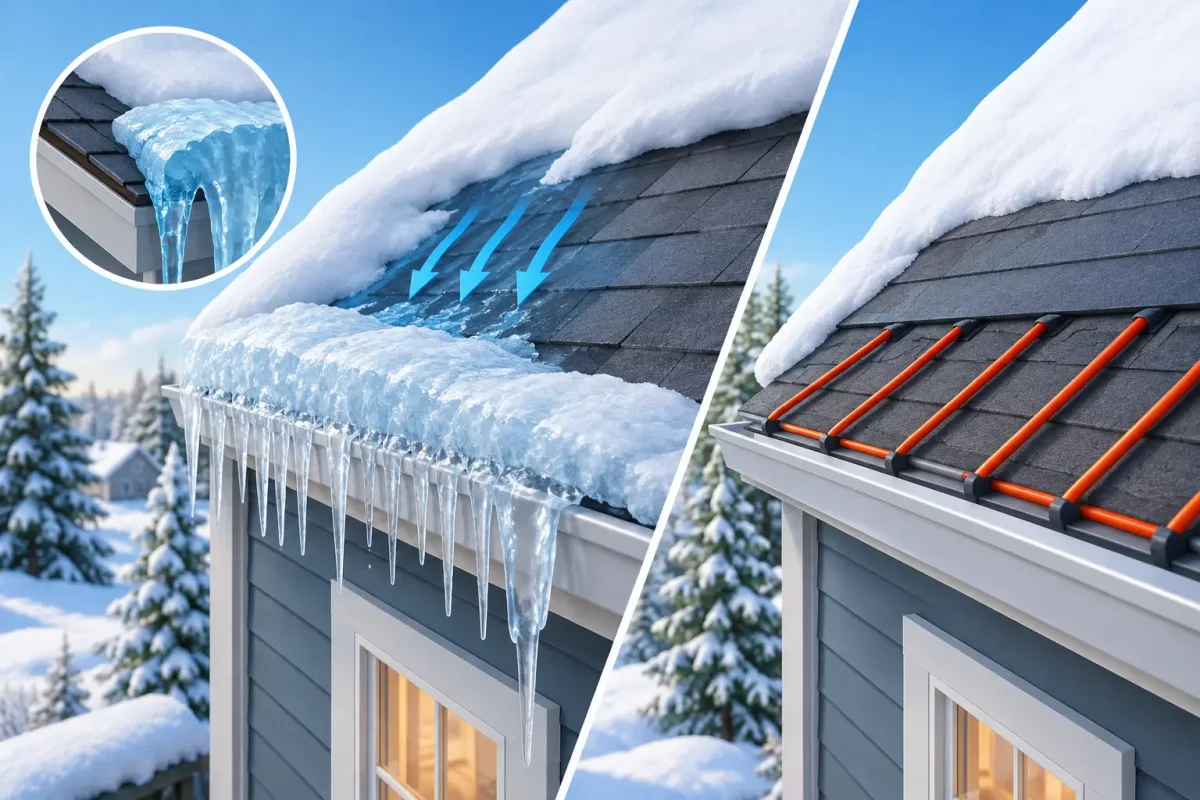
A water stain on the ceiling after a freeze-thaw cycle is rarely just a roof problem. It can be a warning that heat is escaping through the attic, snow is melting unevenly, and water is being pushed back beneath the shingles. Effective ice dam solutions address that full chain of events before winter moisture damages insulation, drywall, fascia, or the roof deck.
An ice dam forms when snow melts on a warmer section of the roof, runs down toward the colder eaves, and refreezes. The ridge of ice that develops at the edge traps additional meltwater behind it. Since that water has nowhere to go, it can work its way under shingles and into the home.
For homeowners, the goal is not simply to remove visible ice. It is to find out why the roof is warming unevenly and correct the exterior details that leave the home vulnerable.
Why Ice Dams Keep Coming Back
Ice dams are most common after repeated snowfalls and fluctuating temperatures. However, weather is only part of the story. A properly performing roof system should keep the roof surface relatively consistent in temperature, even when there is snow overhead.
Warm air from the living space often enters the attic through gaps around light fixtures, plumbing stacks, attic hatches, ductwork, and wall openings. Inadequate insulation allows that heat to reach the roof deck. Snow melts above the warmer area, then refreezes when it reaches the colder overhang.
Poor attic ventilation can add to the issue by holding warm, moist air in the attic. Damaged, missing, or improperly installed soffit and ridge ventilation may prevent air from moving through the space as intended. In some homes, old insulation has settled or been compressed, leaving uneven coverage where heat loss is greatest.
Exterior drainage also matters. Clogged or damaged gutters cannot carry meltwater away efficiently. Loose eavestroughs, bent sections, undersized downspouts, and poor drainage at the foundation can turn a roofline problem into a broader water-management problem. Still, gutters alone do not cause most ice dams, and replacing gutters alone will not solve an attic heat-loss issue.
Ice Dam Solutions Start With a Full Inspection
The right repair depends on what is happening above and below the roof deck. A professional inspection should look at the roof covering, flashing, eaves, soffit, fascia, attic insulation, ventilation pathways, and eavestrough system together.
Start with the signs you can see
Heavy icicles, a thick band of ice along the eaves, sagging gutters, peeling paint on fascia boards, and stains on interior ceilings all deserve attention. Icicles may look seasonal, but large ones can signal that water is freezing where it should be draining. Their weight can also strain gutters and pull fasteners loose.
A contractor should check whether shingles are lifting, whether flashing is open around roof penetrations, and whether the lower roof edge has signs of recurring water backup. If leaks are already appearing indoors, prompt action matters. Repeated wetting can damage wood sheathing and create conditions for mold growth inside concealed areas.
Look inside the attic before recommending repairs
The attic often provides the clearest evidence. Wet insulation, frost on roof sheathing, dark staining, blocked soffit vents, or visible air gaps can point to the source of the problem. The inspection should also confirm whether ventilation channels are maintained from the soffit area upward rather than buried under insulation.
This diagnosis prevents wasted money. For example, adding more insulation without sealing major air leaks may reduce the symptom but not fully stop it. Adding ventilation without enough insulation can also fall short. A lasting solution usually requires the right combination of air sealing, insulation, ventilation, and roof-edge protection.
Fix Heat Loss Before Treating the Ice
The most durable approach is to reduce the amount of indoor heat reaching the roof. Air sealing is the first priority because it stops warm air from moving into the attic through hidden openings. Once those gaps are addressed, insulation can be evaluated for depth, consistency, and condition.
Ventilation then helps keep the attic closer to outdoor temperature and removes moisture that can condense on the roof deck. Proper soffit intake and high-level exhaust work as a system. More vents are not always better if they are installed in the wrong locations or if insulation blocks the intake path.
These improvements can also make the home more comfortable. Rooms below the attic may feel less drafty, temperature swings can be reduced, and heating equipment may not have to work as hard. The exact scope depends on the age of the home, the roof design, and what the inspection finds.
Protect the Roof Edge and Drainage System
When roofing work is needed, the lower roof edge deserves special attention. A properly installed ice and water barrier beneath the shingles offers an additional layer of protection where ice dams are most likely to force water upward. It is not a replacement for insulation and ventilation, but it is valuable protection during a reroof or repair.
Flashing details around valleys, chimneys, skylights, and walls should also be checked. These are common locations for water entry, and winter conditions can expose installation problems that are not obvious during dry weather.
Eavestroughs should be securely fastened, pitched correctly, and clear enough to direct water toward downspouts. If gutters are old, leaking, undersized, or pulling away from the fascia, replacement may be part of a larger exterior repair. Strong fascia and well-installed soffit are equally important because they support the gutter line and help protect attic ventilation.
Heated gutter cables can be useful in limited situations, such as a difficult roof section where recurring freezing cannot be fully avoided. They should be viewed as a targeted aid, not the primary fix. Cables use electricity, require proper installation, and do not correct heat loss from the attic.
What to Do When an Ice Dam Is Already There
An active ice dam should be handled carefully. Climbing onto an icy roof, chipping at ice with sharp tools, or using open-flame devices can damage shingles and put people at risk. Avoid breaking ice against the roof surface or pulling down heavy icicles from a ladder.
If water is entering the home, move valuables away from the affected area and contain drips where possible. Contact a qualified roofing professional to assess the roof and recommend safe removal methods. Steam-based ice removal may be appropriate for some situations because it removes the dam without aggressively scraping the roofing material.
It is also wise to document visible damage. Photos of ceiling stains, ice buildup, damaged gutters, or loose fascia can help track changes and support discussions about the repair scope. Do not wait until spring if there is an active leak. Water can travel along framing before it becomes visible, so the stain you see may not be directly below the entry point.
When a Repair Becomes an Exterior Upgrade
Some ice dam problems reveal that several exterior components are nearing the end of their service life. A roof replacement may create the right opportunity to improve underlayment and flashing. Failing gutters may need replacement at the same time as fascia repairs. Damaged soffit can be updated while improving attic airflow.
Coordinating this work reduces the chance of one new component being installed over another weak one. It also produces a cleaner finished result and can help protect the investment for years to come. For homes in Hamilton, Burlington, and Oakville, where winter weather can shift quickly between snow, rain, and deep freezes, a coordinated inspection is often more valuable than a quick single-item repair.
Petra Eavestrough & Siding helps homeowners assess roofing, soffit, fascia, and eavestrough concerns as connected parts of the exterior. A clear on-site inspection and customized recommendation make it easier to prioritize the repairs that will protect the home first.
If ice is building at your roof edge or water stains are appearing indoors, schedule an inspection before the next freeze-thaw cycle turns a manageable concern into a larger repair.

16 October 2026
Petra Siding Wins Hamilton’s Canadian Choice Award

16 October 2026