
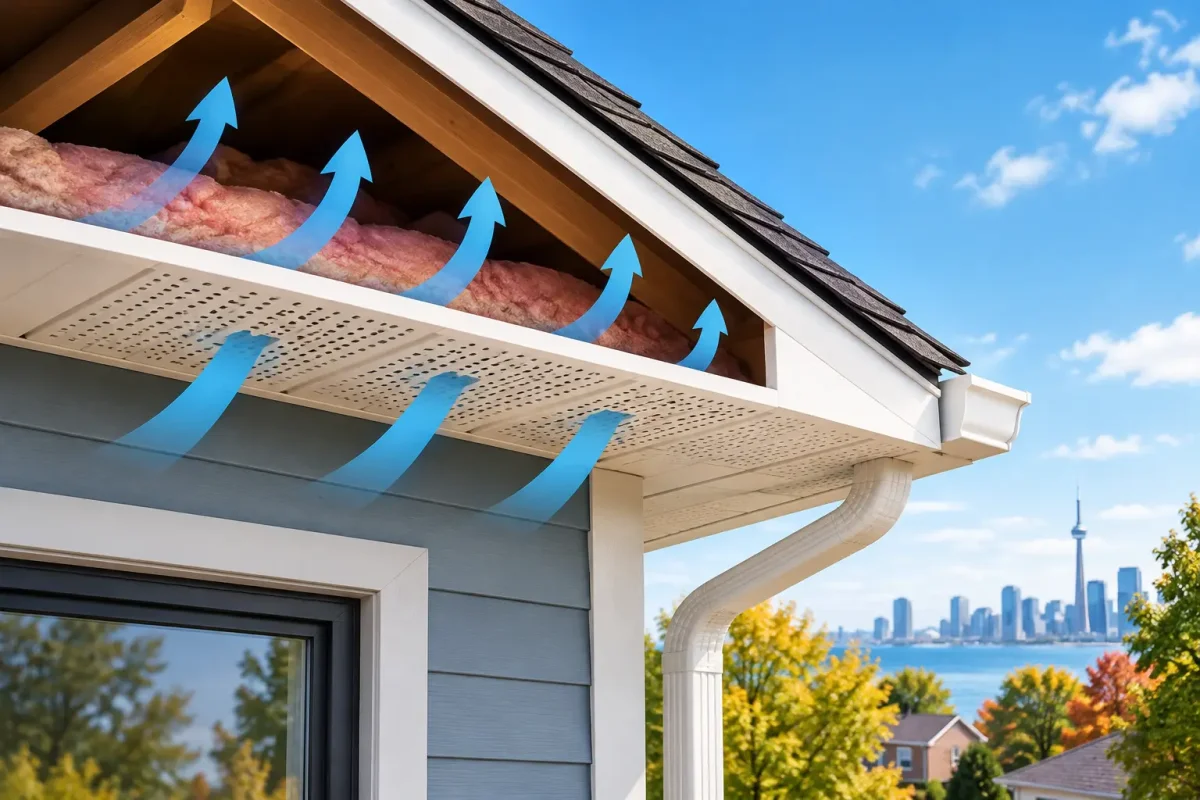
A roof can look perfectly fine from the street while the attic beneath it is holding too much heat and moisture. That hidden buildup can shorten the life of roofing materials, contribute to ice dams, and create conditions that lead to damp insulation or mold. That is why soffit vents matter: they provide the fresh air intake that helps an attic ventilation system do its job.
For homeowners, soffit vents are not a cosmetic detail under the eaves. They are part of the home’s protective system, working alongside roof vents, insulation, fascia, gutters, and roofing to manage the conditions above your ceiling. When they are damaged, blocked, or missing, the consequences often appear elsewhere first.
Why soffit vents matter for attic ventilation
Soffit vents are installed on the underside of the roof overhang, also called the soffit. Their job is to bring outside air into the attic at the lower edge of the roof. As that cooler air enters, warmer air can exit through vents closer to the roof peak, such as ridge vents or other approved exhaust vents.
This airflow cycle matters because attics naturally collect heat and moisture. In summer, sunlight can drive attic temperatures far above outdoor temperatures. In winter, warm indoor air can escape into the attic through small gaps around light fixtures, plumbing penetrations, and ceiling openings. That warm air carries moisture with it.
A properly designed ventilation system helps reduce both problems. It does not replace good insulation or air sealing, and it cannot correct a roof leak. But it gives trapped heat and moisture a path out instead of allowing it to linger against roof sheathing, insulation, and framing.
The key word is balanced. Adding more exhaust vents without enough soffit intake can reduce performance. An attic needs a planned path for air to enter low and leave high. A professional inspection can confirm whether the venting is adequate for the roof design, attic layout, and existing materials.
The problems caused by poor soffit ventilation
Poor airflow does not always create an obvious emergency overnight. More often, it quietly adds stress to the exterior and attic over several seasons. Homeowners may notice the result without realizing that soffit ventilation is part of the cause.
Moisture can damage the attic from the inside
During cold weather, moisture in the attic can condense on the underside of cold roof decking. You may see frost on nails, damp wood, stained insulation, or water marks when temperatures rise again. Over time, repeated condensation can contribute to wood deterioration and mold growth.
Ventilation is only one part of moisture control. Bathroom fans, kitchen exhaust, dryer vents, and plumbing stacks must discharge outdoors rather than into the attic. Air leaks from the living space should also be sealed. Still, when soffit vents are blocked or inadequate, the attic has less ability to dry out after normal moisture exposure.
Excess heat can wear on roofing materials
An overheated attic puts added strain on the roof assembly. Shingles already face direct sun, rain, wind, and freeze-thaw cycles. Extreme heat beneath the roof can add to that burden and may contribute to premature aging in some situations.
No vent system can make a dark roof cool on a hot day, and ventilation alone will not solve a poorly insulated home. However, proper intake and exhaust airflow can help moderate attic conditions and support the long-term performance of the entire roofing system.
Ice dams can become more likely
Ice dams are common concerns for homes in Hamilton, Burlington, Oakville, and other areas that experience snow, melting, and sudden temperature swings. They form when snow melts on a warmer upper roof, runs down toward a colder roof edge, and refreezes. Water can then back up beneath shingles.
Soffit ventilation can help keep the roof deck more consistently cold when combined with effective insulation and air sealing. It is not a guaranteed cure for ice dams because roof shape, snow load, indoor heat loss, and weather all play a role. But inadequate ventilation can make uneven roof temperatures harder to manage.
Insulation can lose effectiveness
Many attic ventilation issues start with insulation installed too tightly against the roof edge. If insulation covers the soffit vents, outside air cannot enter the attic as intended. In some homes, loose-fill insulation has shifted over time and buried the intake openings.
Proper vent chutes or baffles create a clear channel from the soffit area into the attic while keeping insulation where it belongs. This is a small detail with a major impact. The attic needs enough insulation to slow heat loss, but it also needs a clear air path at the eaves.
Signs your soffit vents need attention
A visual check from the ground can reveal cracked panels, missing vented sections, peeling material, or bird and insect damage. But many ventilation problems are hidden behind the soffit or inside the attic.
Warning signs can include persistent attic dampness, musty odors, visible mold, frost on roof nails in winter, unusually hot upstairs rooms in summer, or recurring ice buildup along the eaves. Staining on soffit panels can also point to a roof or gutter issue that needs prompt attention.
Blocked vents are another frequent issue. Paint, dirt, insulation, wasp nests, and debris can restrict airflow. Aluminum, vinyl, and other soffit materials can all perform well when installed correctly, but the vent openings must remain open and properly protected from pests.
If a roof replacement, siding project, fascia repair, or eavestrough replacement is already planned, it is a smart time to assess the soffits. Access is often easier, and coordinating the work helps avoid replacing one exterior component while leaving a related problem behind.
Soffit venting is part of a complete exterior system
Soffits sit where several important parts of the home meet. The roof edge sheds water into the eavestrough. Fascia supports the gutter line and finishes the roof edge. Soffit closes and ventilates the underside of the overhang. Siding and trim tie the wall assembly together below.
That is why isolated fixes can sometimes miss the real issue. A sagging gutter may be connected to deteriorated fascia. Damaged soffit may be caused by overflowing eavestroughs or a roof leak. An attic moisture problem may involve ventilation, insulation, air leakage, or improper exhaust ducting.
A full exterior inspection looks at how these components work together. The right recommendation might be a limited soffit repair, new vented panels in specific areas, fascia replacement, roof ventilation improvements, or a broader exterior upgrade. The scope should match the condition of the home, not a one-size-fits-all package.
When replacement makes more sense than repair
Minor damage, a clogged opening, or a loose panel may be repairable. Replacement is often the better long-term choice when soffits are extensively warped, water-damaged, pest-damaged, or installed without enough ventilation capacity.
Homeowners should also consider replacement when completing a roof or siding renovation. Matching the soffit, fascia, and siding materials can improve curb appeal while correcting hidden performance issues at the same time. It can also reduce the disruption of scheduling separate projects later.
Material selection depends on the home and the desired look. Vented vinyl and aluminum soffit options are popular because they are durable and low-maintenance. The best layout depends on the roof structure and the existing exhaust ventilation, not simply on choosing the panel with the most visible holes.
Get the attic and roof edge checked together
Soffit vents are easy to overlook because they are tucked under the eaves. Yet they play a practical role in protecting the roof, attic, insulation, and indoor comfort. If you have noticed moisture signs, ice damming, damaged soffit panels, or aging roof-edge materials, ask for an inspection that considers the entire system.
Petra Eavestrough & Siding helps homeowners identify exterior issues before they turn into larger repairs. A clear on-site assessment can determine whether your soffits need cleaning, repair, replacement, or better coordination with the roof and attic ventilation. The goal is simple: keep the home protected, the roof edge finished properly, and the work completed with fewer surprises.
3 November 2026
Oakville Exterior Renovation Case Study Results
3 November 2026