
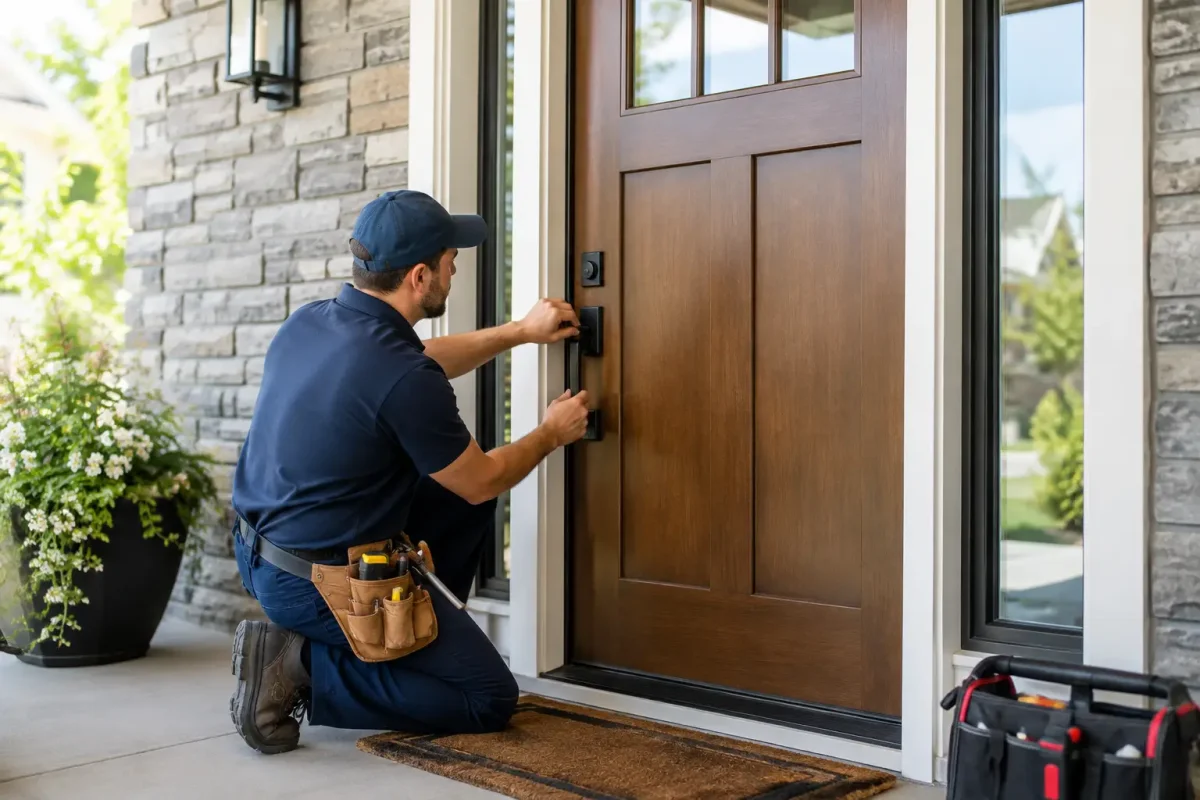
A front door that sticks, lets in a cold draft, or shows daylight around the frame is more than a curb appeal issue. It can affect comfort, security, and the condition of the wall around it. Professional entry door installation services address the entire opening – not just the slab you see from the driveway – so your new door performs properly through changing weather.
For homeowners planning an exterior update, an entry door can make an immediate difference. The right style gives the front of the home a cleaner, more finished look, while proper insulation and installation help reduce drafts and moisture risk. The quality of the installation matters as much as the material you select.
When an Entry Door Needs More Than a Repair
A small adjustment can sometimes solve a door that rubs the threshold or needs a new weatherstrip. But repeated problems often point to an aging door system, worn frame, or moisture damage behind the trim. If the door is difficult to lock, feels soft around the frame, leaks during heavy rain, or has visible gaps, it is worth having the full opening inspected.
Older wood doors can warp, crack, or absorb moisture over time. Steel doors may dent or rust, particularly near the bottom edge. Fiberglass doors are highly durable, but even a quality fiberglass door will not perform well if the frame is out of square or the flashing behind the exterior trim is missing or damaged.
Replacement is also a practical choice when the door no longer matches other exterior improvements. New siding, stone veneer, soffit, fascia, or windows can make an old entry door stand out for the wrong reasons. Coordinating these details creates a more finished exterior and prevents the need to remove newly completed work later.
What Professional Entry Door Installation Services Should Include
A reliable installation starts with measuring the existing opening, checking the condition of the sill and surrounding framing, and discussing how the door will be used. A busy family entrance has different needs than a formal front door that sees less daily traffic. Security hardware, glass panels, sidelights, screen or storm door compatibility, and accessibility should all be considered before a door is ordered.
On installation day, the old door, trim, and damaged materials are removed carefully. The installer should inspect the rough opening for rot, water staining, or structural movement before setting the new unit. Covering a damaged sill with new trim may look acceptable at first, but it does not solve the source of the problem.
The new prehung door is then leveled, plumbed, and secured so it opens, closes, and locks correctly. This step is critical. A door can look straight from the outside yet bind at the latch or leave uneven gaps if the frame has not been installed accurately.
Proper sealing comes next. The threshold needs support and protection, exterior flashing must direct water away from the wall, and insulation around the frame should reduce air leakage without forcing the jamb out of alignment. Exterior caulking is a final weather barrier, not a substitute for correct flashing and preparation.
A professional crew should also reinstall or replace interior and exterior trim neatly, test the lock and sweep, remove job-site debris, and walk you through the finished work. The result should feel solid, close smoothly, and look complete from both sides of the door.
Choosing the Right Door Material for Your Home
There is no single best entry door for every property. The right choice depends on your budget, exposure to sun and rain, desired look, and maintenance expectations.
Fiberglass is a popular option for homeowners who want durability with the appearance of painted or stained wood. It resists dents, does not readily warp, and can provide strong insulation. It is often a good fit for exposed front entrances and homes where a wood-grain appearance is preferred without the upkeep of a traditional wood door.
Steel doors are typically a cost-effective choice with solid security and good energy performance. They work well for many side and rear entries, although the exterior finish should be maintained if the door is exposed to frequent moisture or road salt. A deep dent can be difficult to repair cleanly.
Wood offers natural character and can be a strong architectural choice for certain homes. It does require regular finishing and careful maintenance, especially in areas with direct weather exposure. For homeowners who want the visual impact of wood with less maintenance, fiberglass is often worth comparing.
Glass inserts and sidelights bring natural light into an entryway, but they also affect privacy, energy performance, and cost. Decorative or frosted glass can provide daylight while limiting visibility from the street. For a highly exposed entrance, consider insulated glass and hardware designed for regular use.
Do Not Overlook the Frame, Sill, and Hardware
A new door panel alone cannot correct a failing frame. Water commonly enters at the threshold, exterior brickmold, or joints where old caulking has broken down. Over time, that moisture can damage wood framing and create conditions for drafts, insects, and interior finish problems.
During an estimate, ask whether the existing jamb and sill can be retained safely or whether a full-frame replacement is recommended. Full-frame work can cost more than a basic slab replacement, but it allows the installer to inspect the opening, repair hidden deterioration, and build a better weather seal. If there is any sign of rot or recurring water intrusion, it is usually the better long-term decision.
Hardware also deserves attention. A dependable deadbolt, reinforced strike plate, and properly aligned latch improve day-to-day security. Choose a handle set that suits the door thickness and handing, and make sure it is compatible with any smart lock you plan to use. Attractive hardware is a finishing detail, but it should still be built for frequent use.
Plan the Door as Part of Your Exterior Upgrade
Door replacement is often easiest when it is planned alongside siding, stone, window, or roofing work. Coordinating the project allows the exterior trim, flashing, and color choices to work together. It can also reduce unnecessary disruption, since nearby materials may need to be removed or adjusted to properly integrate the new door.
For example, if siding ends at the entry trim, the trim and flashing should be installed in the correct order to shed water. If stone veneer surrounds the opening, measurements and clearances need to be confirmed before fabrication begins. These details are why an experienced exterior contractor can be especially valuable for larger renovation projects.
Petra Eavestrough & Siding helps homeowners assess how doors fit into the complete exterior, whether the project involves one worn entry door or a broader update to siding, windows, and trim.
Questions to Ask Before You Approve the Estimate
A clear estimate helps prevent surprises after work begins. Confirm whether it includes removal and disposal of the existing door, repairs to damaged framing if needed, insulation, flashing, trim, caulking, hardware installation, and cleanup. If the quote includes a door unit, make sure the style, color, glass option, and handing are documented.
You should also ask about lead times, expected installation duration, warranty coverage, and how the crew will protect nearby landscaping and interior floors. Most standard door replacements can be completed quickly once the product arrives, but custom sizes, sidelights, structural repairs, and coordinated exterior work can extend the schedule.
Licensed and insured installation matters because the door protects one of the most heavily used openings in your home. A reputable contractor should be able to explain the work in plain language, identify concerns before installation, and stand behind both the product and labor.
A Better First Impression Starts at the Opening
Your entry door should welcome guests, keep the weather outside, and lock with confidence every time you leave the house. If yours is drafty, damaged, outdated, or difficult to operate, a professional inspection can clarify whether a repair is enough or a full replacement will better protect your home. A well-installed door is a daily upgrade you notice every time you come home.

12 October 2026
Window Replacement Buyer Guide for Homeowners
12 October 2026